Teaching Up: Controlled Surface Access
The couch isn't the problem. Uninvited is the problem. "Up" makes every surface invitation-only — which is how dogs and furniture coexist in peace.
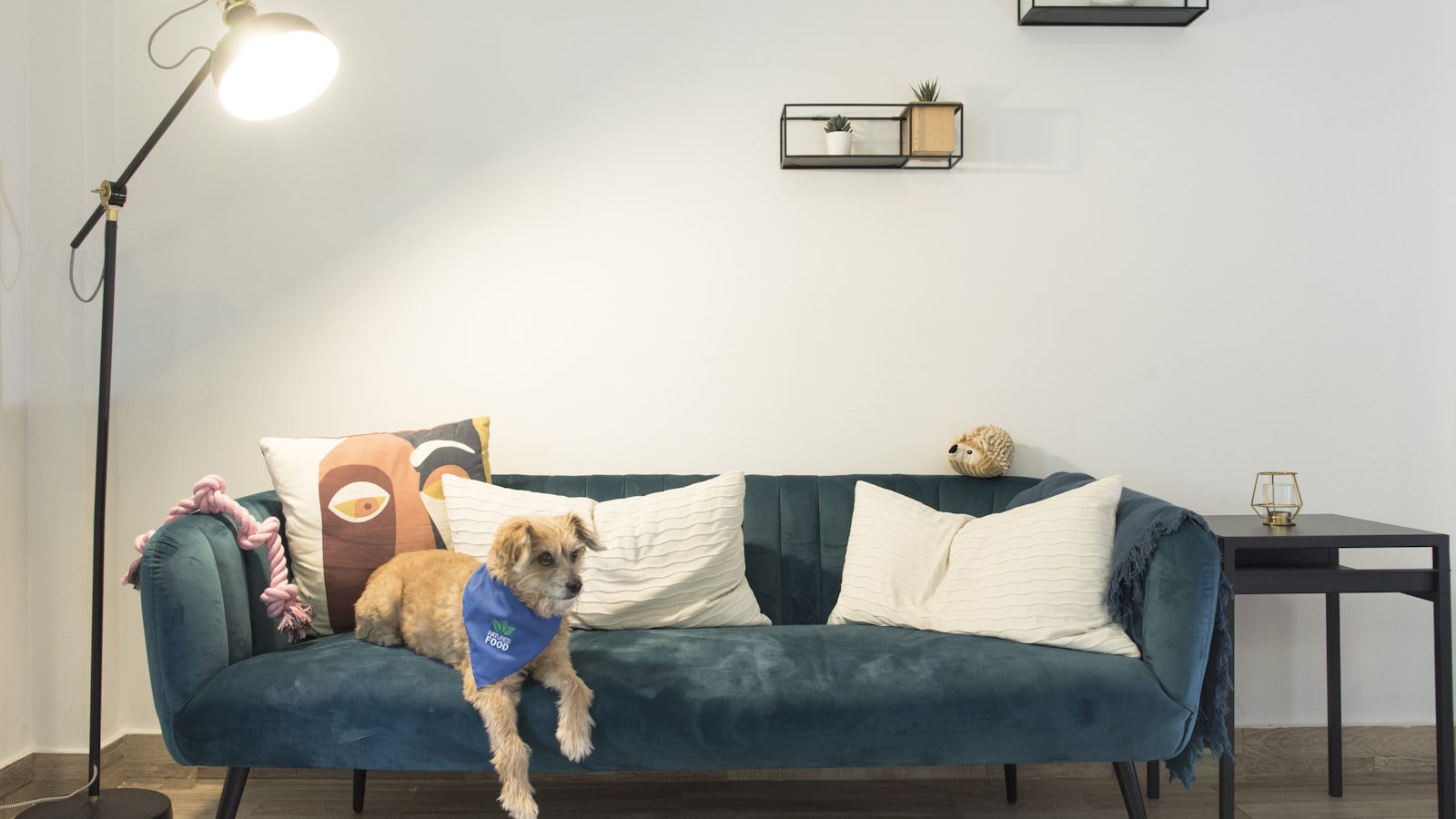
Half the dog owners you know are fighting the furniture war: dog on the couch, dog shooed off the couch, dog back on the couch the moment the humans leave, everyone slightly annoyed forever. Here's the armistice: stop litigating whether the dog is allowed up and start controlling when. "Up" (onto the surface, on invitation) paired with the "off" you've already built (four on the floor, on request) turns every couch, bed, car seat, and grooming table into a door with a doorbell — and a dog who rings instead of barging.
The couch war ends when 'up' is a privilege with a password — not a right and not a crime.
📋 Quick Read
- Up-on-cue reframes furniture from contested territory to invitation-only: the dog learns that waiting near the surface and being asked is what produces couch time.
- The cue does real work beyond the sofa: onto the vet scale, into the car hatch, onto the grooming table — one word for 'put yourself up there' beats lifting a reluctant dog every time.
- It pairs with 'off' as a matched set: two clean cues, two directions, zero ambiguity — the ambiguity was what the whole war was made of.
- When the treaty leaks — freelance boarding the moment you leave, an 'off' that takes three asks — the fix is almost always consistency and better pay, not sterner enforcement.
What you need
Small, soft treats for both directions — up pays and off pays, every time in the early days. One low, easy, policy-approved surface to build on before anything high or slick gets involved. The household's signatures on the surface list, because the training is only as strong as its least consistent human. Management tools for the transition — the laundry basket on the cushion, a closed door — so freelance boarding can't keep paying itself. And for small dogs, seniors, or anything tall: a ramp or steps, which count as part of the policy too.
Set the policy before the training
Household meeting, one minute: which surfaces are ever dog-accessible (couch yes, bed by invitation, armchair never — whatever suits you), and everyone enforces the same list. The dog can learn any policy; what they can't learn is a policy that varies by human or by day. Then set the mechanics: invitation-only means the dog gets asked up — patting the cushion plus your cue — and never self-boards. If your dog currently self-boards freely, expect a transition period where management (a strategically placed laundry basket, a closed door) prevents the freelance boarding that would keep paying itself.
Build the up, then weld it to the off
Start with a low, easy surface your policy allows. Pat it, cue "up!" bright and happy, lure if needed, and pay on arrival — a few reps in, the pat-plus-word launches the dog with joy. Then immediately train the other direction: treat tossed to the floor, "off," pay at ground level (this is your Teaching Off lesson cashing in). Alternate them in the same session — up, pay; off, pay; up, pay — until both directions are equally happy news. That alternation is the secret: a dog for whom 'off' predicts another likely 'up' has no reason to defend the cushion, and the resource-guarding energy drains out of the furniture entirely.
How the cue earns its promotions
The build runs lure, then pat-plus-word, then word alone — and each stage has a look. Early on the pat and the lure do the work; you're ready to drop the lure when your dog launches on the pat before your treat hand so much as twitches. You're ready for the word alone when you can stand upright, say "up," and get a happy boarding with no patting at all — test it once a session, and when it fails, no drama: back to pat-plus-word for a few more reps. Both directions gate every promotion. Move nothing forward until "off" is as fast and cheerful as "up," because a build where only the boarding is fluent is half a treaty.
The finished picture is the doorbell — the dog who stations beside the couch and looks at you instead of boarding. When you see it, the teaching era is over and the answering era begins: respond to the look every time, sometimes yes, sometimes no, always consistently. New surfaces join one at a time, each with its own lure-then-fade mini-build, and the Three-Surface Tour is the graduation exam.
Where the treaty leaks
When up-and-off springs a leak, it's almost always one of five. None of them calls for sterner enforcement — just a patch.
Still self-boards the moment you leave the room. Not defiance — unfinished bookkeeping. The couch has years of self-service history, and your dog's ledger says it still pays when unsupervised. Close the loophole with management for a few more weeks while the invitation habit deepens, and make invited couch time genuinely frequent, so the legal route is obviously the better deal.
'Off' takes three asks and a sigh. The dismount is underpaid relative to the cushion. Sweeten it — better treat, warmer praise — and fix the real economics: keep the odds of a fresh 'up' soon afterward high. An 'off' that usually means intermission gets fast; an 'off' that always means eviction gets slow.
Enthusiastic on the couch, refuses the car hatch or the scale. Usually a footing or height problem wearing a stubbornness costume. Slick metal, wobbly platforms, and tall liftgates are legitimately harder asks. Look at the surface from a dog's-eye view, add a ramp or a step where the math is bad, lure the first reps generously, and let confidence build on each new surface before expecting the word to carry it alone.
The doorbell look has become a doorbell bark. The stationing worked — and then, somewhere, barking got answered. Go quiet and boring for the bark, and answer the silent look promptly and often; the dog keeps whichever version works. If the polite version only gets noticed once it turns loud, loud is what you're training.
The rules melt when one particular human is home. The oldest leak in the treaty. Your dog isn't confused — they've correctly learned that the couch has different laws depending on who's holding the remote. This one is human training: re-run the one-minute meeting, shrink the policy to something everyone will actually enforce, and remember that a modest rule kept perfectly beats a strict rule kept mostly.
Same treaty, different dogs
Puppies learn invitation-only fastest — no years of freelance boarding to unlearn — but their joints are still under construction, so keep the practice surfaces low, let a ramp or steps handle the vertical, and file big leaps under someday rather than today. Adult self-boarders need the opposite emphasis: more management, more patience, and a genuinely generous invitation rate while the old habit runs out of funding.
Small breeds and seniors get the ramp-and-steps clause enforced for life — 'up' onto the ramp is the same trick with better joint economics, exactly as the policy intends. And any dog who starts hesitating at a surface they used to board happily has earned a comfort question before a training answer; bodies change, and the treaty should change with them.
Take the cue to the places that matter
Now generalize where it pays dividends: "up" onto the bathroom scale (then the vet's — walk in with a dog who self-weighs and watch the techs applaud), into the car hatch or onto the seat, onto the groomer's table, onto the paused treadmill for conditioning work, onto the picnic bench for the vacation photo. Each new surface is a fresh mini-build — lure the first rep or two, pay well, fade fast. For seniors, small breeds, and anything high or slick: ramps and steps are part of the policy too, and "up" onto the ramp is the same trick with better joint economics. The cue's finished form is a dog who mounts what you point at, cheerfully, and only what you point at.
Keeping the peace
The treaty maintains itself on two habits. First, keep answering the doorbell — the stationed look survives only as long as it keeps working, in both directions, from every human in the house. Second, keep the useful surfaces warm: a couple of practice 'ups' onto the bathroom scale or the car hatch in an ordinary week costs thirty seconds and means the next vet visit or road trip runs on a rehearsed cue instead of a wrestling match. If standards slip after a chaotic stretch — holidays, guests, a weekend of cheerful anarchy — don't renegotiate; re-run a few days of clean alternation reps and the old law snaps back. The couch war only ever restarts one uninvited boarding at a time, and it re-ends the way it ended the first time: with a rule that never flickers.
- The allowed-surfaces list exists and everyone knows it
- 'Up' is invitation-only — no self-boarding
- 'Off' pays at floor level, every time
- Up and off alternate in training (off predicts another up)
- 'Off' and 'down' are different words for different things
- Car, scale, or table 'up' has been practiced
- Ramps or steps cover the joints that need them
🗓 This Week's Plan
- Days 1–2: Hold the policy meeting, write the list, block freelance boarding with management.
- Days 3–4: Build 'up' on one easy surface and weld it to 'off' with alternation reps.
- Days 5–7: Generalize — car, scale, or bench — and finish with the Three-Surface Tour.
Start the Teaching Up plan in Pak Social
Write the surface list tonight and teach the first invited 'up' tomorrow. One week of clean invitations and evictions, and the couch stops being a battlefield.
Get Pak Social — Free ➡️ Up nextTeaching Carry: Reliable Object Transport9 min read›