Teaching Off: Four on the Floor
Guests, counters, couches, and your white pants — one calm cue for getting paws back on the ground, without turning greetings into wrestling matches.
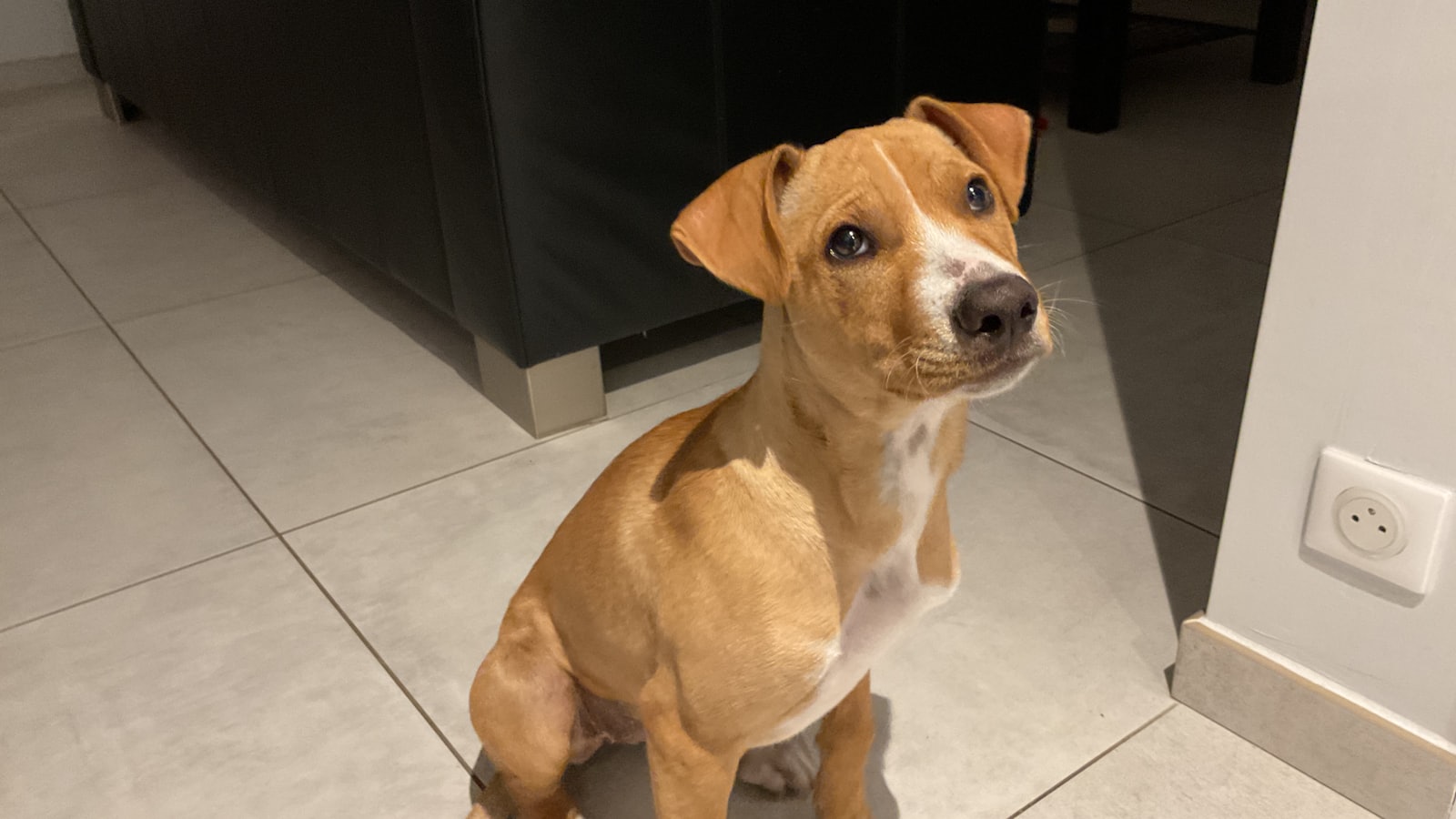
The doorbell rings, your dog goes airborne, and your mother-in-law gets two muddy paws to the cardigan — again. Here's the uncomfortable truth about jumping: it works. Every shove, every "no!", every hand pushing the dog down is attention, and attention was the whole point. "Off" fixes the problem at the root — not by punishing the jump, but by making four-paws-on-the-floor the position where all the good things in life actually happen.
Dogs don't jump to annoy you. They jump because it works — until the floor pays better.
📋 Quick Read
- Jumping is attention-seeking that succeeds: even pushing and scolding are payoffs. The fix is making jumps go economically extinct while floor-level greetings get rich.
- "Off" needs one meaning — paws off (person, couch, counter) — and it can't share a word with "down" (lie down). One word, one job, or your dog is guessing.
- Management is half the training: a leash at the door and coached guests prevent the rehearsals that keep the jumping habit funded.
- Expect the burst: jumping often gets louder right before it goes broke. The dog jumping higher in week one isn't failing the plan — the casino is paying out its last spin.
What you need
No special gear — the economy is the equipment. Soft treats stashed near every entrance, because the payoff has to land within seconds of four paws touching down, and the pantry across the house is too far. A leash hanging by the door for guest management. A household meeting, five minutes, where everyone signs up for statue duty — one family member paying jumps with squeals keeps the whole habit funded. And a recruitable friend for staged arrivals later. The only expensive item is the consistency.
Make jumping a dead end
When paws leave the floor aimed at a human, that human becomes furniture: turn sideways, arms folded, eyes elsewhere, zero commentary (even "off!" shouted mid-jump is airtime). The instant all four paws hit the ground — that exact second — warmth returns: attention, a treat delivered low, a calm greeting. Most dogs run the new math within days if the rule never bends. For the committed leaper, step back through the door and close it briefly; the greeting only proceeds at floor level.
Attach the cue, then teach what TO do
Once floor-landings are happening on their own, name the moment: say "off" as the paws head down, pay on arrival. For couches and counters, lure or toss a treat to the floor, cue "off" as the dog dismounts, pay at ground level — never drag by the collar (that turns furniture into a conflict zone and your hands into the enemy). Then install the real endgame: an incompatible greeting behavior. A dog cued to sit for hellos, or to grab a toy at the doorbell (many jumpers channel beautifully into a mouth-full-of-toy greeting ritual), has a job that makes jumping physically impossible.
How to know the economy has flipped
You'll see the flip before the doorbell tests it. The tell is the abort: the rear-end loads for launch, then thinks better of it and folds into a sit — your dog doing the new math in real time. That, plus floor-level homecomings from your own family on eight arrivals out of ten, means the home economy has genuinely changed and you're ready to stage guest drills. Pay those aborts like they're gold, because they are: that's the choice point choosing you.
If family arrivals are still airborne, hold off on staging guests — auditioning too early just funds the relapse. Make your own entrances easier to pass first: come in flat and quiet, ignore the dog for the first minute, greet only at floor level. And after any backslide, shrink the excitement before you blame the dog. Arousal is the dial, and the door controls it. A dog too fizzy to think isn't choosing the floor or the air — they're just airborne, so a calm minute on leash before the door opens buys more training than ten reps after it.
The guest protocol (training the humans)
Guests are the final exam and the biggest liability, so run arrivals like a drill: dog on leash before the door opens, guest briefed on the statue rules ("ignore him till he sits — I know, it's hard"), sit paid generously, greeting granted at floor level. Enthusiastic dog-loving visitors are the hardest to train — the ones who say "oh I don't mind!" while funding your dog's relapse. Hold the line kindly. A few weeks of consistent doors and your dog's doorbell response transforms from launch sequence into sit-and-vibrate — enthusiasm intact, paws grounded.
When 'off' goes sideways
Off breaks in predictable ways — and the most alarming one is actually good news.
The jumping gets worse before it gets better. Expect this. When a slot machine stops paying, gamblers pull the lever harder before they quit — so a dog whose jumps suddenly stop working may jump higher, paw, or bark for a few days. That surge is often the sign the plan is working, not failing. Hold the statue, pay the floor, and let the casino go broke.
Perfect with adults, launches at the kids. Children squeal, flail, and run — from a jumper's perspective, they're payout machines with excellent sound effects. Small kids can't hold a statue, so don't ask them to: manage with the leash when kids are arriving, pay four-on-the-floor near children lavishly, and coach older kids on the fold-arms-turn-away move as a game they can win.
Off the couch on cue, back aboard three seconds later. You've built a vending machine: climb up, get cued off, collect at floor level, repeat. Break the loop by paying the staying-off, not just the getting-off — a treat a few seconds after the dismount, then at lengthening intervals — and give the dog somewhere to be instead. A bed with its own payment plan beside the couch outcompetes the cushions (the Place lesson builds exactly this).
Floor-level at hello, airborne mid-visit. The greeting was managed; the visit wasn't. Excitement recycles every time the guest stands up or heads for the kitchen, so give your dog a job for the duration — the toy ritual, a chew on their bed, or a leash left on early so you can interrupt calmly. Guests are a session, not a moment.
The sit happens, but it's a barely contained spring. That's not a problem to fix — that's enthusiasm wearing its seatbelt. Don't hold a vibrating dog in a long sit at the door; pay fast, release to the floor-level greeting quickly, and let duration grow over weeks. You're pruning the jump, not the joy.
Same economy, different dogs
Puppies are the cheap case — jumping that never gets funded never becomes a career. The hazard is the cuteness tax: everyone pays a ten-pound puppy for the exact move they'll statue at fifty pounds. Start the floor economy on day one. Adult rescues may arrive with years of funded jumping on the books; the method is identical, but expect a bigger burst and a longer runway, and lean harder on the leash-at-the-door management while the new economy takes hold.
Big, exuberant adolescents make management non-negotiable — a seventy-pound greeting can knock a grandparent over while the training catches up, so the leash and the briefed-guest protocol aren't optional extras; they're the safety system. Soft or anxious dogs sometimes jump low and licky, trying to reach your face and smooth things over — that's appeasement, not exuberance. Statue gently, skip anything that reads as looming, and teach the incompatible greeting quickly. This dog isn't gaming the economy; they're asking a question, and the sit gives them a better way to ask it.
Keeping the floor rich
Once the flip sticks, maintenance is mostly vigilance at doors. Every new visitor is a pop quiz, and every 'oh I don't mind!' is an attempted bribe of your student — keep briefing kindly, keep the leash handy for wild-card arrivals, and keep paying calm greetings often enough that the floor never devalues. The sit-for-hellos generalizes beautifully: sidewalk meetings, the vet lobby, and grandma's hallway all run on the same economy. After any long gap — a quiet winter, a house move — expect one round of test jumps and answer them with the same old statue; the habit folds fast when the answer hasn't changed.
And notice what you've actually built. The dog who once went airborne now plants, vibrates, and offers a sit to every arriving human — enthusiasm fully intact, redirected into a greeting people bend down to reward. That was the whole design: you never taught your dog to love people less. You taught them the love pays better from the floor.
- Every family member statues the jumps
- Guests get briefed before the door opens
- Leash on before doorbell greetings
- Sits pay off at every hello
- "Off" means paws-off, "down" means lie down — never swapped
- Nobody roughhouses the jump 'sometimes'
🗓 This Week's Plan
- Days 1–2: Household statue pact — all jumps meet folded arms; all floor-landings meet warm pay.
- Days 3–4: Attach "off" to dismounts (people and furniture); start paying doorbell sits.
- Days 5–7: Run three Doorbell Drills with a briefed guest. Log every clean floor-level greeting.
Start the Teaching Off plan in Pak Social
Fold your arms tonight and pay the floor. Two weeks of airtight economics and the airborne greeting retires — enthusiasm intact, paws down, cardigans everywhere unharmed.
Get Pak Social — Free ➡️ Up nextSettling on a Mat9 min read›