Settling on a Mat
Not a trick — a nervous-system skill. Teaching your dog to truly relax on cue is the quiet superpower behind every calm café dog you've ever envied.
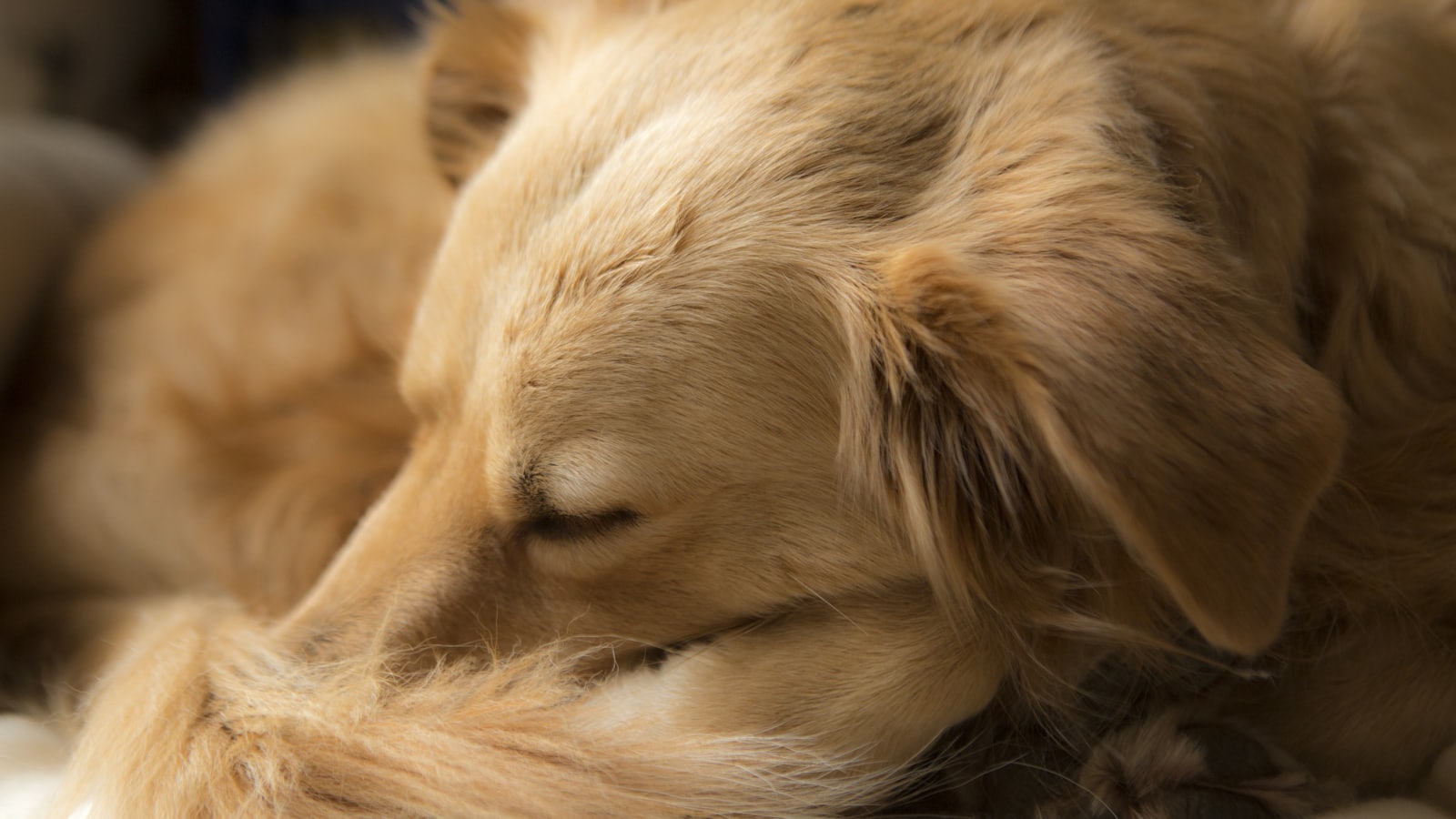
Some dogs have an off switch. Yours, perhaps, has a dimmer that only goes up. Dinner guests arrive and two hours later the dog is still "helping." Here's the reframe that changes everything: calmness isn't a personality trait — it's a trainable behavior. Not the position (any dog can be lured into a down) but the actual exhale: loose muscles, rolled hip, soft eyes. You can capture it, pay it, and put it on cue. Trainers do it every day, with the zoomiest dogs you can imagine.
You can't command calm. But you can catch it, pay it, and watch your dog learn to find it on purpose.
📋 Quick Read
- Settle is taught by capturing: you quietly reward moments of genuine relaxation — the sigh, the hip-roll, the chin-drop — until your dog starts offering calm as a strategy.
- The mat becomes a portable off-switch: condition deep relaxation to one surface, and the surface itself starts cueing the nervous system down, anywhere you unroll it.
- Interrupt-and-settle games (play, then calm, then play again) teach the hardest skill in dogdom: coming DOWN from excitement, not just avoiding it.
- When the settle stalls — sentry-duty downs, treat-hand pop-ups, an interrupt game that revs instead of calms — the fixes are quieter than you'd expect, and none of them is saying 'calm down.'
What you need
The equipment list is one item long, plus groceries. A mat, towel, or folded blanket that lives for this job — it's going to become the cue, so it shouldn't double as the tug toy or the mud rug. Soft treats small enough to roll between two paws without triggering a chase. A naturally quiet evening — you're catching calm, so schedule sessions when calm is likely to make an appearance. And patience measured in silences: the best settle sessions look, from the outside, like nothing happening. That's the point.
Capture calm like a photographer
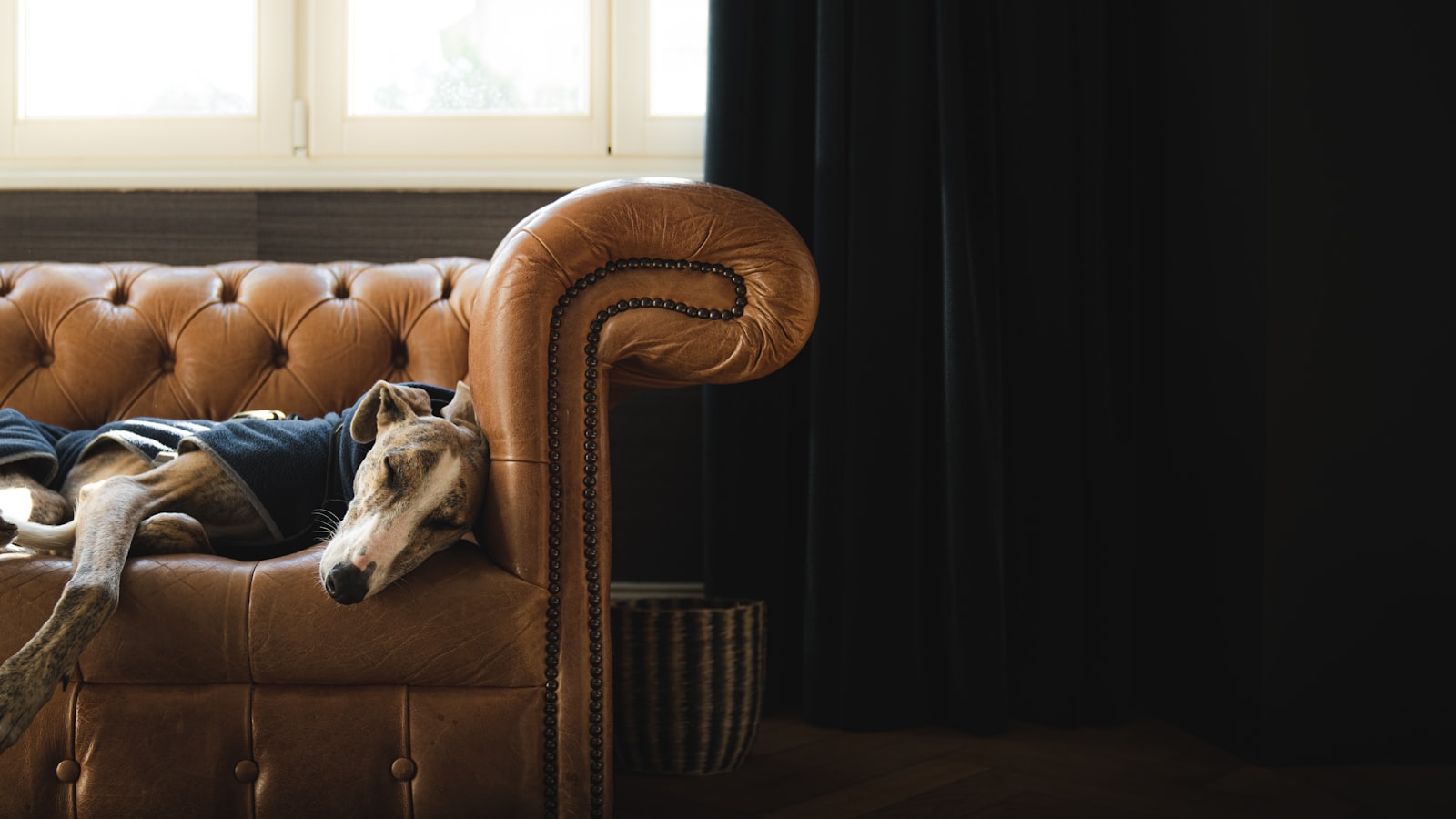
Start on an evening when your dog is naturally winding down, mat on the floor, treats within reach. When they lie on it, drop a treat between their paws — calmly, no fanfare. Then wait. Reward the incremental melt: elbows settling, the hip rolling sideways, the chin sinking, the long sigh. Deliver every treat low and slow, rolled between the paws, so the payment itself doesn't reignite the party. You're not asking for anything; you're photographing relaxation and paying royalties. Within a week most dogs are hitting the mat and theatrically flopping — offering the state, because the state pays.
How to tell the melt is real
Progress in this skill is read in the body, not the clock. The real melt has signatures: the hip rolled out from under, the chin at or near the floor, blinks going long and slow, breathing that settles into a visible rhythm — and the sigh, which is worth double whatever you're paying. A dog holding a tidy down with ears on patrol hasn't settled; they've parked. Pay the park a little and the melt a lot, and the body will follow the money.
Move forward when the mat reliably produces a flop within a minute or two at home — that's when it's strong enough to cue, to use in the interrupt game, and eventually to travel. If a session produces no melt at all, don't grind: your dog may be under-exercised, overtired, or the room too interesting. End pleasantly and try again at a sleepier hour. You can't rush an exhale, but you can schedule around one.
The hardest rep: settling FROM excitement
Calm-on-a-quiet-evening is the beginner level. The life-changing version is recovery — settling down from arousal. Build it with the interrupt game: thirty seconds of tug or play, then stop, go still, and wait (or cue the mat once it's strong). The moment your dog downshifts — sits, lies, softens — quiet praise, a calm treat, and the game resumes as the real reward. You're teaching that arousal is a dial they can turn down, and that turning it down restarts the fun. This single exercise is worth a month of "calm down!" that never worked.
Roll it up and take it everywhere
Once the mat triggers the flop at home, generalize gently: the porch, a friend's kitchen, the office, the brewery patio at dead hour. Bring the mat, cue the settle, pay the melt — the familiar surface carries the calm into the new place like a portable bedroom. Expect the settle to be shallower in new places at first (a soft down, not the full hip-roll flop); pay what you get and let depth come with repetitions. This is the machinery behind every serene brewery dog you've ever envied — not a mellow temperament, but a conditioned square of fabric and a few hundred paid exhales.
When the settle won't come
Settle stalls in familiar ways, and because the skill is a state rather than a position, the fixes are quieter than you'd expect.
Lies down, but like a sentry. Position without state — the down is there and the off-switch isn't. Dim everything you're adding: longer pauses between treats, a slower hand, lower light, no eye contact. Then wait for one degree of extra softness — an elbow slide, a weight shift — and pay that. You're rewarding movement down the dimmer, not the posture at the top of it.
Pops up every time your hand moves. The payment is undoing the purchase. Slow your reach to a crawl, roll the treat the last few inches, and lengthen the gaps so your hand stops being the most interesting object in the room. If the popping persists, deliver a few treats without any reach at all — dropped from wherever your hand already rests.
Offers the greatest hits instead. Sits, downs, a paw, a hopeful bark — a dog with training history will flip through the catalog when the mat doesn't explain itself. Ignore the concert entirely; the only thing that pays tonight is stillness. Starting the session when your dog is already halfway to sleepy shortens the show considerably.
The interrupt game winds them up instead of down. The play bursts are too long or too hot for where your dog is now. Cut them to fifteen seconds, pick a lower-octane game than tug, and be genuinely willing to wait out the downshift — early recoveries can take minutes, and paying the eventual downshift is the entire lesson. The recovery timer shrinks with reps; that's the skill arriving.
Settles only when already exhausted. Useful information, not failure — you've found where calm currently lives. Capture it there for a week, then start sessions at slightly lower levels of tiredness and let the skill walk backward toward ordinary evenings. The goal is a dog who can find the exhale on purpose, not one who needs a trail run to locate it.
Same mat, different dogs
The capture is the same for every dog; the schedule isn't. Puppies produce genuine calm in brief, random windows — usually right after the zoomies burn out. Camp near the mat at those hours and photograph what shows up; two paid exhales a day is a real curriculum at twelve weeks. Adolescents and high-drive dogs are the long game: take the edge off with real exercise first, then let the recovery timer — not the wildness of the play — be your progress bar. Three weeks of shrinking recoveries is spectacular work even if each burst still looks unhinged.
Rescues and anxious dogs may find relaxation in a strange place genuinely unfamiliar — a dog scanning the room isn't withholding calm; they don't have it to give yet. Set the mat away from doors and windows, keep sessions short, and treat a soft down with a slow blink as the victory it is. Naturally mellow dogs are the easy mode: the state is already on offer, so your whole job is attaching it to the mat. Expect to be done embarrassingly fast.
An off-switch you can carry
Once it's installed, use it everywhere ordinary life needs a dimmer: the mat comes out for dinner, for work calls, for the kids' movie night, for the first ten minutes of a guest's visit. Each real use is also maintenance — a settle deployed a few times a week never rusts. And keep the lanes straight with its neighbors: Place is the position contract with an address, Go to Bed is the nighttime routine, and settle is the nervous-system skill that makes both of them look effortless.
Keep paying royalties — forever, but thinly. An occasional quiet treat between the paws of a dog who chose the mat on their own is the best money you'll spend all week. After a vacation or an upheaval, expect the settle to run shallow for a few days and pay whatever depth shows up; the exhale comes back faster than it was built. That's the nature of the skill: you're not fighting your dog's temperament, you're funding a habit their body already likes.
🗓 This Week's Plan
- Days 1–2: Evening capture sessions — pay the melt on the mat, treats rolled low and slow.
- Days 3–4: Add the play-settle-play interrupt game, twice daily, thirty-second bursts.
- Days 5–7: First road trip for the mat (porch, friend's house), then the Dinner-Guest Test. Score the recovery each day.
Start the Settle plan in Pak Social
Tonight: mat down, lights low, pay the first sigh. In a month the mat unrolls at a café and your dog's nervous system follows it down — that's the superpower, installed.
Get Pak Social — Free ➡️ Up nextPlace Training for a Calm Household9 min read›