Teaching Go to Bed: Peaceful Nights for Everyone
Place training's bedtime cousin: a dog who heads to their own bed on one cheerful cue — and stays there until morning.

It's 10:47 p.m. You're doing the nightly negotiation: the dog is on your bed, or circling it, or staging a sit-in at the bedroom door. Whatever your house rules are — dog bed, dog room, or foot-of-your-bed — the thing that makes nights peaceful isn't the rule, it's the routine: a cue that means "day's over, here's your spot," and a spot so well-conditioned that your dog beats you to it. That's "go to bed," and it turns bedtime from a negotiation into a ritual.
Peaceful nights aren't about where the dog sleeps. They're about the dog knowing where — every night, no debate.
📋 Quick Read
- Go to bed = the place cue, specialized: same send-and-stay mechanics, pointed at the sleeping spot and welded to a consistent evening ritual.
- Dogs are ritual machines: a repeatable wind-down sequence (last potty, water check, cue, chew, lights) does more for night calm than any single command.
- Whatever your sleep rule is — crate, dog bed, your bed by invitation — consistency is the kindness. Rules that change nightly create the 10:47 negotiations.
- When nights wobble — the ten-minute reappearance, the 5 a.m. breakfast lobby, the post-vacation collapse — every fix is boring, consistent, and applied in daylight, never at midnight in an angry voice.
Pick your rule and post it on the fridge
First, the household decision nobody makes explicitly: where does the dog sleep? Crate, dog bed in your room, dog bed elsewhere, your bed by invitation — all legitimate; pick based on your dog (puppies and new rescues usually do best within earshot of you) and your actual preferences, not guilt. What breaks dogs' nights is inconsistency: on the bed Tuesday, banished Wednesday, negotiated Thursday. Whatever you choose, everyone in the house enforces the same rule for a month before you're allowed to renegotiate. The dog isn't confused by any rule; only by rules that flicker.
What you need
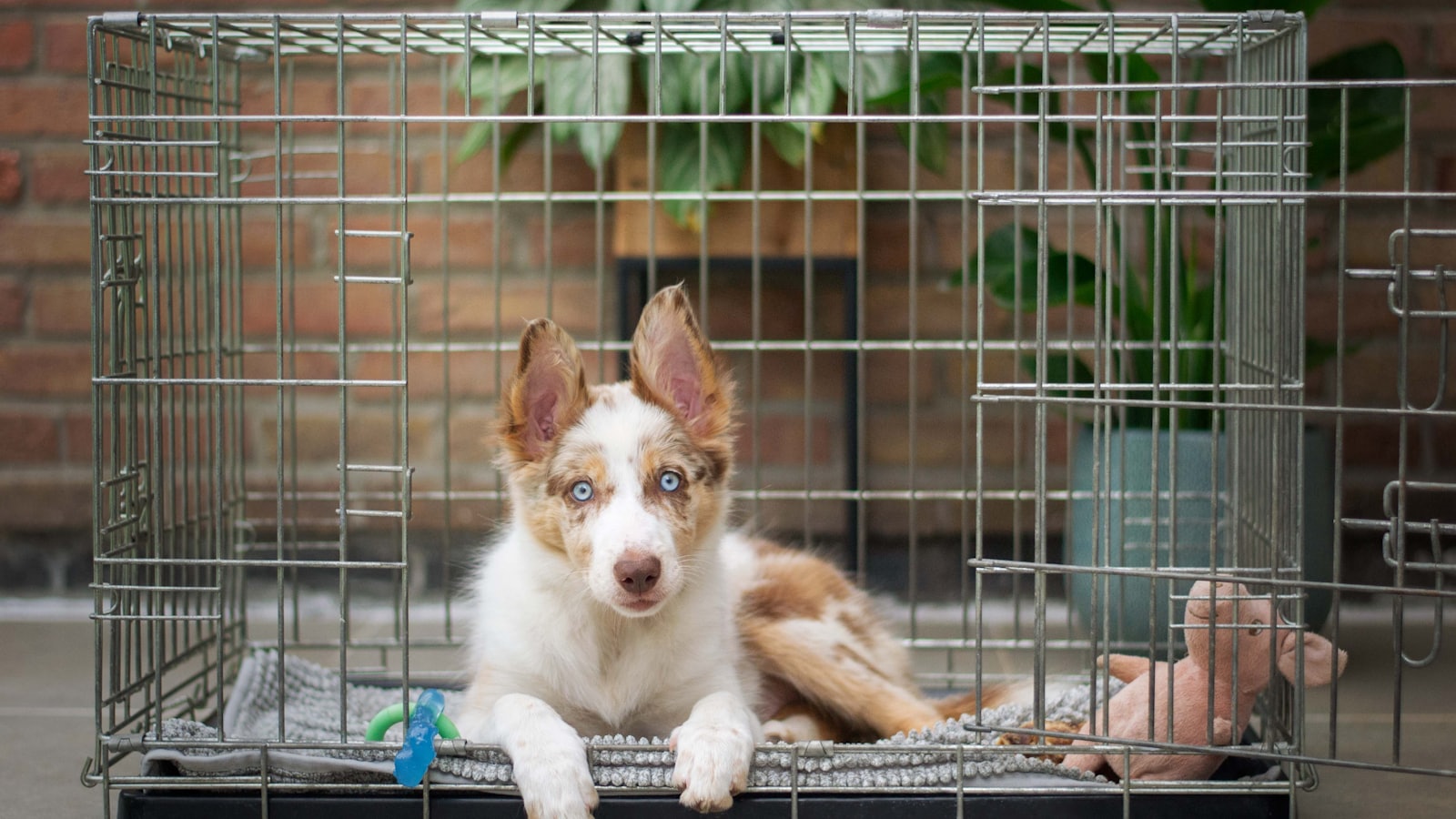
With the rule posted, the kit is short. The sleeping spot itself — crate, dog bed, or the agreed corner of yours — parked in its permanent location, because a bed that migrates is a rule that flickers. Small treats for the daytime reps that keep the cue bright. The bedtime-only chew — the monopoly asset, sourced once and hoarded ruthlessly. And the same ten minutes every night: the ritual is the real equipment, and it's the one item you can't buy.
Condition the night spot
Run the place-training playbook on the sleeping spot (if you've done the Place lesson, this is a transfer, not a new build): treat tosses onto the bed, the cued send — "go to bed," cheerful, never stern — payment on arrival, then duration with a bedtime-only chew. Bedtime-only matters: a special high-value chew that exists nowhere else in life makes the bed a destination with a monopoly. Within a couple of weeks the cue produces a happy trot; within a month, many dogs start pre-boarding when the ritual's early steps begin.
Reading the nights
The build advances on two gauges. Daytime first: when 'go to bed' earns an eager trot from across the room on at least eight tries out of ten, the cue is strong enough to anchor the nightly ritual. Then the nights themselves: settle-time — the stretch between lights-down and genuine quiet — should shrink week over week, and midnight walkabouts should get rarer. Those two lines falling together mean the routine is compounding, and you can let the ritual carry more of the weight.
If the trot goes reluctant or the cue needs repeating, hold the line and drop back a step: more daytime send-pay-release reps, a jackpot on arrival for a few nights, the sequence tightened so every step lands in the same order. A wobbling week is a signal to make the routine more boring and more identical — not to invent new rules at midnight.
The ritual and the 3 a.m. clause
Build the staircase and walk it identically each night: last potty trip (businesslike, boring), water check, "go to bed" send, the monopoly chew, lights down. For crated dogs the crate rules apply (doors open for quiet, never for noise); for free-sleeping dogs, escorted returns — silent, boring, back to the spot — handle the midnight wanderers. The 3 a.m. clause: a young puppy or a dog who suddenly breaks a solid night routine may genuinely need out, or may be telling you something health-worthy; changes in night restlessness that persist earn a vet conversation, not just more training.
When nights go sideways
Night routines break in a handful of recognizable patterns. None of them gets fixed at midnight in an angry voice — the repairs all happen in daylight.
Goes to bed on cue, reappears at your bedside ten minutes later. The spot got conditioned as a destination, not a residence. Upgrade the chew so it outlasts the settling-down window, run daytime duration holds on the spot the way you built the send, and keep every return escort silent and dull. The bed has to be worth staying in, not just worth visiting.
Settles, then convenes the 5 a.m. breakfast lobby. Dawn noise that produces breakfast — or even a groggy scolding — is noise that pays. Quiet is what opens the day: wait for a stretch of silence before you get up, and put a buffer between rising and feeding so the bowl stops being the direct payout for the alarm-clock routine. Expect a few loud mornings while the old system goes broke.
Whines or barks from the spot at lights-out. First, run the 3 a.m. clause honestly — a young puppy or a new rescue may genuinely need out, and a boring, businesslike potty trip costs nothing. If needs are covered, protest noise fades within days when it never once opens doors or starts conversations. What shouldn't be waited out: distress that escalates night after night instead of fading. A dog panicking about being apart needs the spot moved within earshot and a slower plan, not a firmer one.
The routine collapses after a trip or houseguests. Normal, and cheap to fix — don't start over. Re-run the full staircase with a few extra escorted returns and a jackpot chew for two or three nights, and the routine usually resurfaces in a fraction of its original build time. Rituals bend; they rarely break.
Settles, but circles and resettles half the night. Before you train harder, audit the real estate: a bed in the hallway traffic lane, under a draft, or against the household's noisiest wall is a hard place to sleep, and dogs vote with their feet. Move the spot somewhere more den-like and re-anchor it with a few cued sends. And if a formerly sound sleeper turns restless for nights on end with nothing changed, that's the 3 a.m. clause talking — book the vet conversation before you rewrite the training.
Same ritual, different dogs
Puppies need the spot within earshot of you for the first stretch — night confidence is built on knowing the family didn't vanish — and their bladders set the schedule, not your preferences. Expect legitimate 3 a.m. clause invocations for weeks, keep those trips gloriously boring, and let your crate routine carry its share if a crate is your rule. Adult rescues arrive with unknown nights behind them; some have never slept indoors, others never slept alone. Start the spot near you even if the long-term plan is elsewhere, and relocate it gradually — a few feet at a time — once the routine holds.
High-energy dogs expose the honest math of bedtime: a dog with unspent legs can't buy what the ritual is selling. If settling takes an hour, the fix usually lives in the afternoon — real exercise and real sniffing — not in a sterner send. Anxious, velcro-style dogs treat distance from you as the problem itself: shrink it first, build the ritual where they can succeed, and stretch the distance only after the nights run quiet.
The nights after the build
A finished go-to-bed doesn't ask for much: the ritual is the maintenance. Keep the chew a bedtime monopoly forever, keep the sequence in the same order even on late nights — especially on late nights — and take the bed along when you travel, because the familiar spot carries the routine into strange rooms. If you've built Place or the mat Settle, you'll recognize this skill as their nighttime sibling: same send, same spot-loyalty, aimed at the household's quietest hour.
And when the month is up and someone wants to renegotiate the rule — dog on the bed, dog off the bed, dog in the room — do it deliberately: one change, announced to the household, held consistently for its own month. Dogs handle new rules gracefully. It's the flicker they can't sleep through, and by now you've built a dog who'd rather keep the ritual than test it.
- Evening sniff-walk or scatter (spend the last energy)
- Last potty trip, kept boring
- Same 'go to bed' cue, cheerful voice
- Bedtime-only chew delivered on the spot
- Lights and household noise stepped down
- Quiet, boring returns for any midnight wandering
- One rule about where the dog sleeps — that never flickers
🗓 This Week's Plan
- Days 1–2: Household vote: the sleep rule, written down. Start daytime 'go to bed' reps — send, pay, release.
- Days 3–4: Introduce the bedtime-only chew and run the full ritual sequence both nights.
- Days 5–7: Ritual Week in full swing — log settle-times nightly and watch for pre-boarding.
Start the Go to Bed plan in Pak Social
Pick the rule, cue the first cheerful send, and deliver the monopoly chew tonight. Seven identical evenings from now, 10:47 stops being a negotiation.
Get Pak Social — Free ➡️ Up nextTeaching Shake: Paw Training That's More Than a Trick9 min read›