Teaching Bring It: Advanced Retrieval and Delivery
Fetch that finishes: go out, pick up, come back, deliver to hand. The complete retrieval chain — and the graduation exercise for everything this series taught.
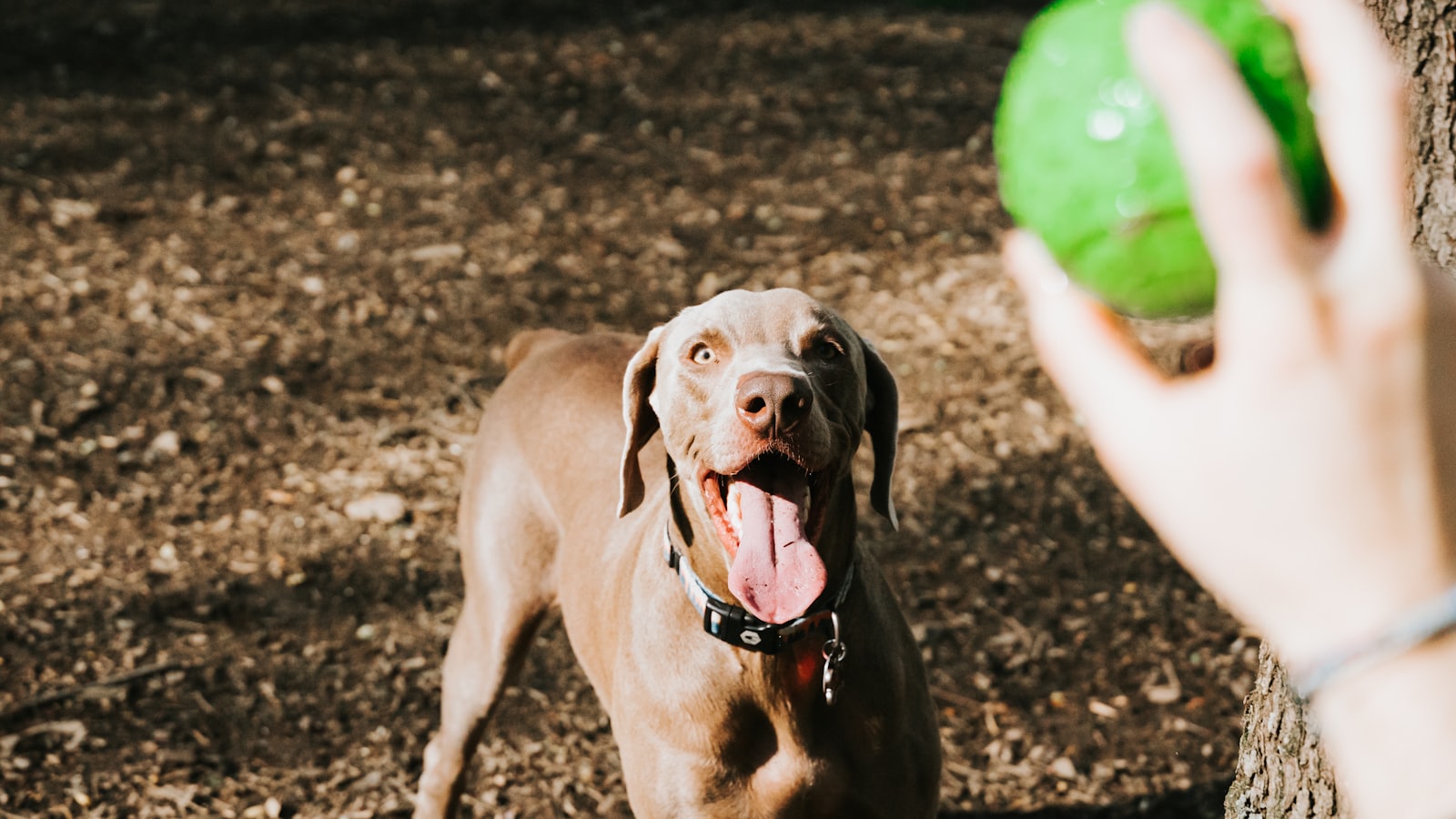
Every dog park has one: the dog who chases the ball brilliantly, picks it up triumphantly… and then plays keep-away for ten minutes while their human negotiates. That's not a fetch problem — that's a missing delivery. "Bring it" is the full chain: out to the object, pick it up, return all the way, and place it in the hand. It's also this series' graduation exercise, because the chain quietly contains everything you've built: the recall, the hold, the drop-it trade, and a dog who's learned that finishing the job is where the payday lives.
Fetch without the delivery is just sprinting with extra steps. Bring it is fetch that finishes.
📋 Quick Read
- The chain has four links — go out, pick up, return, deliver — and the weak one is almost always the return-and-deliver, because running back to you competes with victory laps and keep-away.
- Backchaining wins: with the hold and delivery already fluent (the Carry lesson), you're attaching the fun front half to a finish the dog already knows pays.
- Keep-away has one honest cure: never chase, pay returns extravagantly, and make the delivery restart the game — the throw itself becomes the reward for finishing.
- Retrieves fail at known links — the drop ten feet short, the return that detours into a victory lap — and each failure names the link to rebuild, almost always by shrinking the runway.
What you need
A fetch object your dog already loves — plus an identical twin if keep-away is in the forecast, because two-ball is the cleanest cure going. Treats for the early sessions, before the throw itself takes over the payroll. The Carry lesson's hand delivery, fluent — that's the entry test, not a suggestion; this whole method builds runway in front of that landing. And a hallway or quiet room to start in, graduating to a yard or fenced space once the chain holds indoors.
Start from the finish (you already built it)
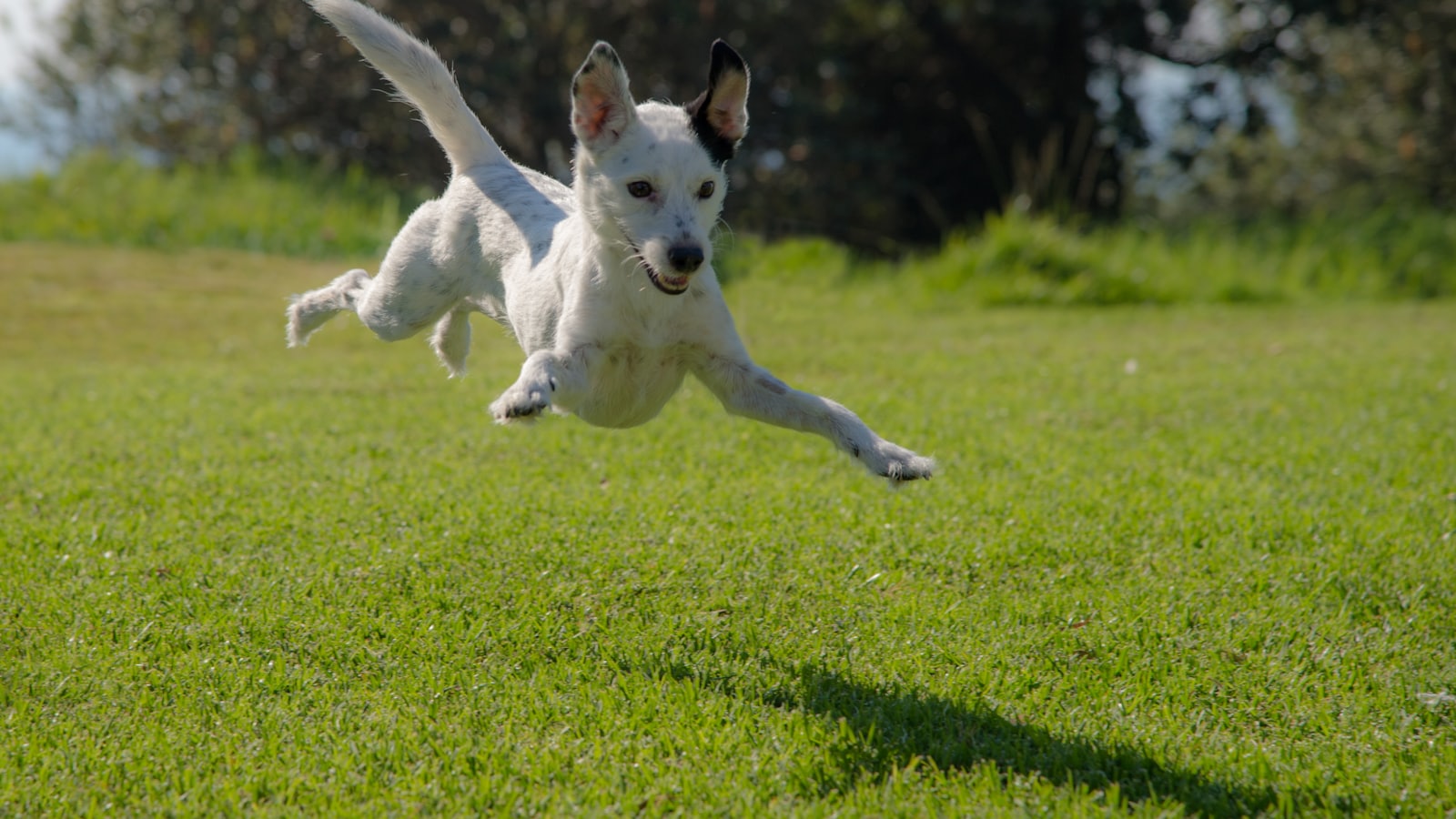
Dust off the Carry lesson's endgame: object in mouth, delivered to your open hand, traded and paid. Run a refresher session until that's crisp. Now add distance-to-you: toss the object just a foot away, let your dog grab it, and immediately invite the return — crouched, cheerful, hands open. One foot of retrieval ending in a known, paid delivery. Then three feet, then across the room. You're not teaching anything new; you're stretching the runway in front of a landing your dog already sticks.
Stretching the runway
Distance promotes on clean finishes and nothing else: one foot becomes three when the one-foot retrieve ends in your hand essentially every time, and so on out to room length, then the yard. Between throws, watch the pickup posture — the snatch-and-look is your green light, the grab-and-angle-away your red one — and let it overrule any schedule. When the red light shows, the runway shrank for a reason; drop back to the distance where the look at you returns.
The other promotion is the payroll handover. Early retrieves end in a treat trade; the finished game ends in the next throw. Make the switch gradual — treat and throw together for a stretch, then the throw alone, with treats reappearing only for the occasional brilliant return — and hold one rule steady through the transition: the delivery always triggers something good, instantly. A chain is only as strong as the certainty at the end of it, and for a fetch-loving dog, the certainty of the next throw is the hardest currency there is.
The go-out, and the death of keep-away
The front half — sprinting out and picking up — usually needs no training at all, just management of what happens next. Two rules kill keep-away permanently. One: you never chase — a dog circling with the ball finds you crouched, patting your legs, jogging backward away from them (flight is magnetic; pursuit is a game). Two: returns pay like jackpots and the delivery triggers the very next throw, instantly. For committed keep-away artists, run two-ball fetch: the second ball appears the moment ball one is delivered, making the trade so obviously profitable that the victory lap gets cut from the program by the dog's own accounting.
Where retrieves go to pieces
Every broken retrieve is a broken link, and the link announces itself if you watch the pattern.
Drops it ten feet short and looks proud. To your dog, close enough was the deal — probably because early games paid approximate returns. Tighten the criteria without drama: a short drop earns a friendly nothing while you crouch, pat your legs, and invite the last ten feet; only the hand delivery restarts the game. If the shortfall persists, shrink the throws until short isn't possible, and re-stretch from there.
The victory lap is back. Keep-away resurfacing after clean sessions usually means distance outran the delivery habit — or somebody chased, once, and refinanced the whole game. Re-post the law (nobody chases, ever, houseguests included), shorten the throws, pay the next several returns like jackpots, and bring out the second ball if the artist is committed. The lap disappears as soon as it stops being the most interesting option on the field.
Arrives all the way — then clamps. The return link is fine; the release link needs a coat of paint. Don't tug — a tug-of-war at the finish converts the delivery into a possession game. Run a drop-it refresher session, then short retrieves that end in that well-paid release, and the clamp lets go. If the object is precious, downgrade it: retrieval school runs on cargo the dog can afford to surrender.
Sprints out, pounces, and abandons. The chase was the whole prize; the pickup never joined the chain. Backchain the missing link — pay pickups on their own for a session (object grabbed, mark, trade up close), then reconnect the short retrieves. And audition the cargo: an object that's genuinely fun to grab is far easier to bring home.
Fetch fizzles after three throws. Not every dog is an endurance retriever, and a chain this new burns real concentration. Keep sessions shorter than the enthusiasm — end on a clean delivery while your dog still wants one more — and let the game's length grow with its fluency. Three brilliant retrieves teach more than ten ragged ones.
Same chain, different engines
Ball-obsessed dogs are the easy hire: the throw is the paycheck from day one, and your whole job is holding the delivery standard while the engine roars. Low-drive retrievers — the dogs who watch a ball roll past with mild academic interest — need the back half built on treats and the front half built on better cargo: something that squeaks, flutters, or smells interesting. The chain is identical; only the currency changes.
Puppies get the miniature version — soft toys, short tosses, brief sessions — with the never-chase law in force from the very first rep, because the keep-away habit you never install is the one you never have to cure. And multi-dog households should train the chain solo first: a rival mid-retrieve turns every return into a race and every delivery into a negotiation.
Graduate it: real objects, real jobs, real workouts
With the chain fluent on toys, generalize: named objects ("bring the leash," "bring the slipper" — dogs can learn dozens of object names with startling ease), deliveries to other family members, retrieves out of tall grass by scent. This is where the whole training series compounds: the name-game attention, the recall, the hold, the trade — all running inside one flowing behavior your dog performs at a dead sprint, joyfully. And as pure exercise economics, a reliable bring-it is unbeatable: twenty minutes of self-sustaining fetch spends more dog-energy than an hour of leashed walking, with a brain workout riding along free. If sports call, this is also the seed of everything from AKC Fetch titles to retriever field games.
A game that maintains itself — mostly
A running bring-it loop is close to self-maintaining — every session is dozens of paid reps of the whole chain — but two habits keep it honest. The never-chase law stays on the books forever, for every human who ever throws for this dog; one enthusiastic houseguest can fund a week of victory laps. And the delivery standard stays the standard: if hand delivery quietly erodes into drop-in-the-vicinity, tighten it back up with a session of short throws before the drift compounds — and re-run the Ten-Clean-Deliveries Test now and then as an honest audit. Beyond that, spend the skill. Named objects, family deliveries, tall-grass scent retrieves: the graduation exercise keeps offering graduate work for as long as you both stay enrolled.
- Sprints out to the thrown object
- Picks it up (no pounce-and-abandon)
- Turns back toward you immediately
- Returns the whole way (no victory laps)
- Delivers to hand, not dropped at ten feet
- Releases on the drop-it cue, no tug war
- Delivery triggers the next throw — game runs itself
🗓 This Week's Plan
- Days 1–2: Delivery refresher, then one-foot retrieves — stretch the runway in front of the known finish.
- Days 3–4: Room-length retrieves; institute the never-chase law; try two-ball if keep-away lingers.
- Days 5–7: Outdoor distance, delivery-triggers-throw looping, and the Ten-Clean-Deliveries graduation test.
Start the Teaching Bring It plan in Pak Social
One short toss toward a delivery your dog already loves — that's tonight's whole session. Ten clean deliveries from now, you've got self-sustaining fetch and a series graduate.
Get Pak Social — Free ➡️ Up nextShaping New Behaviors10 min read›