Shaping New Behaviors
The most powerful training method most owners never learn: reward the tiny approximations, and let your dog invent their way to behaviors no lure could ever guide.
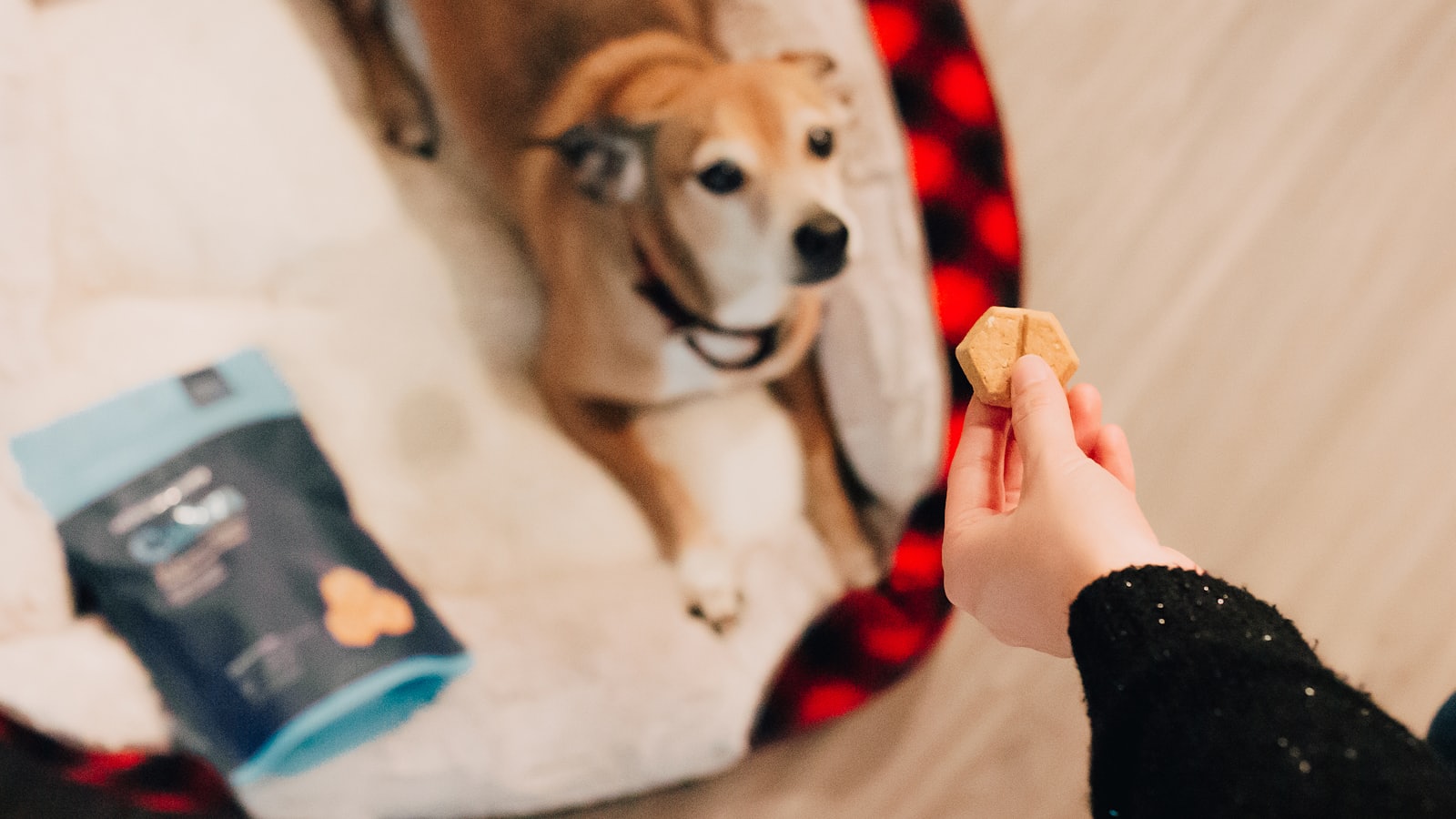
Luring hits a ceiling. You can guide a dog into a sit with a treat at the nose, but how do you lure 'go pick up your toys,' 'ring the bell to go out,' or 'rest your chin here and hold still for the ear drops'? You don't — you shape them: reward the first tiny step toward the goal, then the next, then the next, until the dog assembles the whole behavior themselves. Shaping is the closest thing training has to magic, and the reason it feels like magic is that the dog is doing the thinking.
Luring puts the behavior in your dog. Shaping lets your dog find it — and a dog who found it never forgets it.
📋 Quick Read
- Shaping = rewarding successive approximations: you mark and pay behaviors that are a little closer to the goal each time, building complex actions from tiny buildable steps.
- It unlocks the un-lurable: bell-ringing, tidy-up, cooperative-care positions, distance behaviors, and anything a dog resists being physically guided into — plus it's ideal for fearful dogs who dislike hands-on methods.
- The dog becomes an active problem-solver: because they're offering behaviors to see what pays, shaping builds confidence, engagement, and 'learning to learn' — skills that make every future behavior faster to teach.
- The rate of offering is your gauge: a dog throwing tries at the prop means the method is working, and two failed reps at a new bar means it jumped — split finer, never push harder.
What you need
A charged marker — the clicker earns its keep here more than anywhere (Clicker Training 101 covers the charge), though a crisp 'yes' works too. Tiny treats in real quantity: shaping runs at a high pay rate on purpose, so pea-sized and plentiful. A prop for your first project — a mat, a low box, a target stick, a sticky note on a cabinet — because props give the dog something obvious to interact with. A quiet room with nothing more interesting than you in it. And a plan on paper: the goal, plus five or six tiny steps you'd guess lie between here and there. You'll revise it mid-session; that's what plans are for.
The mechanics: mark the approximations
Pick a goal and a first approximation so easy the dog can't fail. Teaching 'go to a mat'? The first click is for a glance toward the mat, or a single step. Mark that instant (clicker or a crisp 'yes'), pay, and reset. Then raise the bar by a hair: now you wait for two steps before marking. Then a paw on the mat, then two paws, then all four, then lying down on it. Each criterion is held until fluent, then nudged closer to the goal. The dog, meanwhile, is actively experimenting — 'what got the click? let me try that again, and more of it' — which is exactly the engaged problem-solving that makes shaped behaviors so durable. Keep sessions short and the rate of reinforcement high; a dog who's clicking frequently stays in the game.
How to know the method is working
Shaping carries its own instrument panel: how often the dog offers, and how quickly. In a healthy session you're marking every few seconds early on, and the dog barely finishes a treat before trying again. That pace is the method working — a dog who's earning fast stays experimenting, and an experimenting dog is the whole engine. When the current step turns quick, confident, and nearly boring, that's your green light to raise the bar a sliver; until then, hold and let the step get cheap.
The red light is just as easy to read: two failed reps at a new criterion means the bar was too high — drop back to the step your dog last nailed and split the difference, the move the next section drills into. And watch the clock harder than you want to: three minutes of fast, generous shaping beats ten minutes of anything. End on an easy, marked win while the dog is still leaning in, and the next session starts halfway warm.
Splitting, lumping, and reading the dog
The master skill of shaping is 'splitting' — breaking the behavior into steps small enough that the dog keeps succeeding — versus 'lumping,' asking for too much at once and stalling out. When a dog stops offering, you almost always lumped: drop back to the last approximation they nailed and split the next step finer. Manage the reinforcement so the dog stays confident: if you raise the bar and they fail twice, the bar was too high. Watch for the 'aha' — the moment the dog suddenly repeats the target deliberately, offering it with intent; that's when you know the concept landed and you can start adding the cue (name the behavior only once it's happening reliably, exactly like every other lesson). And embrace the offered garbage early on: a dog throwing random behaviors to see what pays is a dog fully in the game — you just click the ones heading toward your goal and ignore the rest.
When the shape won't take
Your dog stares at you and offers nothing. Often a history problem: dogs taught mostly by luring learn to wait to be shown. Make the first approximation impossible to miss — put the mat directly in their path, set the box where a paw practically falls into it — and mark the first accidental brush with it. One paid accident usually starts the game.
Your dog offers everything except the thing. Spins, sits, paw-lifts — that's a dog fully in the game who hasn't found the first payable step. Don't correct any of it; just aim your marks. If nothing near the goal has happened in a minute, the first step is too far away — mark a glance in the prop's general direction and build from there.
The behavior loops at one step and won't grow. You paid the same slice so long it became the finished product in the dog's mind. Toss the reset treat away from the prop so each rep starts fresh, then hold out one beat longer than usual — the little extra the dog offers in that beat is your next mark.
Frantic escalation — barking, pawing, spinning harder. The pay rate fell and frustration filled the gap. Lower the criterion, mark more, end soon and sweet. Frustration means the game got too expensive, not that the dog stopped caring.
Yesterday's progress is missing this morning. Normal. Warm up two or three rungs below where you ended and climb; most dogs re-summit in a minute or two, often past the old high point. Starting at yesterday's peak is the lump most owners never notice they're making.
You keep marking a beat late. The dog faithfully learns the wrong slice — the stand-up after the down, the step off the mat. That's your timing, not their understanding, and the fix is the dogless drills in Marker Words and Timing. Sharpen the thumb and the shape cleans itself up.
Same game, different dogs
Puppies shape beautifully in two-minute bursts — keep criteria loose and generous, because what you're mostly teaching is the meta-skill that experimenting pays. Rescues and shut-down dogs may offer nothing for days, and that's history talking, not ability: mark micro-tries — a weight shift, an ear flick toward the prop, one step — and let the dog discover this is the rare game where they control the outcome. For many worried dogs, a first shaped behavior is a visible turn in confidence.
High-drive dogs offer faster than you can think, which is glorious and hazardous: your criteria discipline becomes the limiting factor, because this dog will happily build whatever you actually mark, including the flourishes you didn't mean to buy. Low-drive, food-casual dogs aren't shaping-proof — they're usually underpaid or over-asked. Better treats, a pre-meal slot, and a first step so easy it feels like cheating tends to wake the offering rate right up.
What shaping unlocks
Once you can shape, the training ceiling lifts. Complex chains: tidy-up (shaped from 'touch the toy' to 'pick up' to 'carry to box' to 'drop in' — the carry and drop-it lessons, assembled), bell-ringing to go out, fetching named objects, closing doors. Cooperative care: chin rests, paw presentations, standing still for exams — the handling and vet-anxiety lessons' consent behaviors are pure shaping, and they're un-lurable by nature. Distance and duration behaviors, tricks for the AKC trick titles, and service-style tasks all run on shaping. And the meta-benefit compounds: every behavior you shape makes your dog a better learner — more willing to experiment, more persistent, more 'switched on' in training — so the tenth shaped behavior comes faster than the first. Shaping isn't just a technique; it's how you build a thinking training partner.
One project at a time, forever
Shaping stays sharp the way any craft does: one small project always on the bench. A chin rest this month, a tidy-up next, a camera-worthy head tilt after that. Keep the sessions tiny and the log honest — current step, reps at that step — and let finished projects graduate out of the workshop: once a shaped behavior is on cue, it gets maintained like any other, on the thinning schedule Fading Treats the Right Way lays out.
The two lessons behind this one carry its weight — Clicker Training 101's capture game builds the dog who offers, and Marker Words and Timing builds the thumb that can pay them honestly. When a project stalls in a way splitting doesn't fix, Troubleshooting When Training Stalls is the wider checklist. But mostly: pick the next un-lurable thing and start marking slivers. A dog who's learned to find behaviors never stops looking, and that dog is a delight to train for the next decade.
🗓 This Week's Plan
- Days 1–2: Load your marker (clicker or 'yes'), pick one un-lurable goal, and identify the easiest first approximation.
- Days 3–5: Shape in five-minute sessions — mark approximations, raise the bar in slivers, back up when the dog stalls.
- Days 6–7: Push toward the goal and add the cue once it's reliable; run the Shape-Something Week finale.
Start a shaping project in Pak Social
Pick one behavior no lure could reach, load your marker, and click the first tiny step tonight. The magic is real — and it's your dog doing the thinking.
Get Pak Social — Free ➡️ Up nextTroubleshooting When Training Stalls9 min read›