Teaching Sit: Your Dog's First Victory
It's the simplest cue in the book — which is exactly why it's the perfect place to teach your dog how learning works.
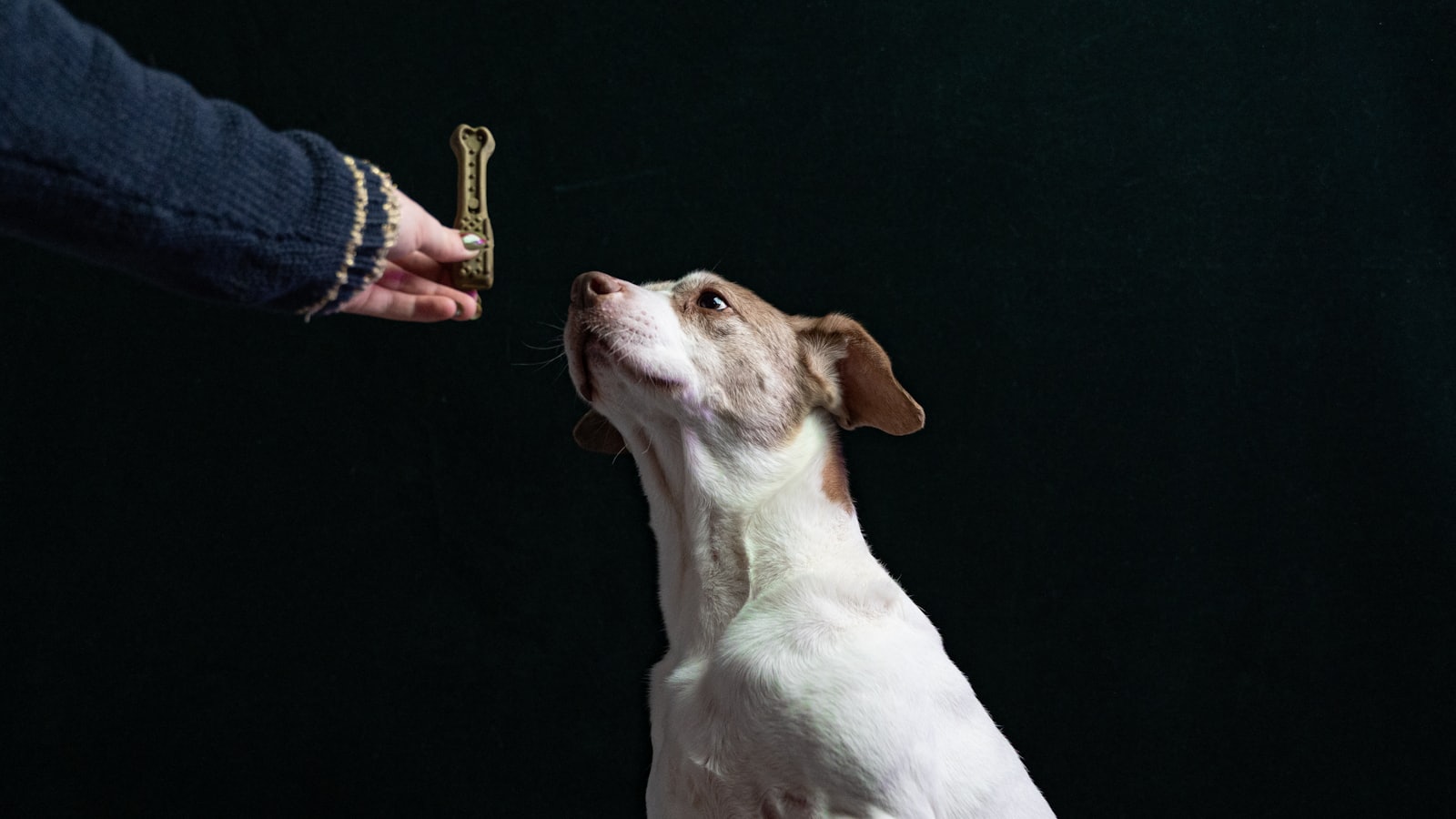
You're trying to clip the leash on and your dog is a furry pinball — bouncing, spinning, all four paws airborne with excitement. Now picture the same doorway with a dog parked in a sit, tail sweeping the floor, waiting for the click of the clasp. That's what "sit" really buys you: not a party trick, but a reset button for excitement — and your dog's first-ever proof that making a good choice makes good things happen.
Sit is your dog's first paycheck: good choices earn good things.
📋 Quick Read
- Sit is the ideal first cue because it's a natural position dogs offer anyway — success comes fast, and fast success teaches the bigger lesson: training is a game you can win.
- The lure method does the work: treat to the nose, slowly up and back over the head, and the rear folds to the floor by pure geometry. No pushing — ever.
- A sit your dog can't do at the door or the park isn't finished: dogs don't generalize, so the cue must be re-earned in each new context.
- Sit fails in tidy, fixable patterns — the treat-visible-only sit, the instant pop-up, the hovering hips — and each one is a clue about your mechanics, not a verdict on your dog.
What you need
The shopping list is almost embarrassing. A dozen small, soft treats per session — pea-sized, swallowed in a second, good enough that your dog votes yes. A quiet room with no squirrels on the ballot. And two or three minutes, a few times a day — sit is built in sessions short enough to end while your dog is still asking for more. No clicker required (a bright "yes!" does the same job), no leash, nothing your kitchen doesn't already contain.
The lure: five reps to the first sit
Quiet room, hungry-ish dog, a treat between your fingers. Let them sniff it, then draw it slowly up and back, just over the head — as the nose follows, the rear folds. The instant the hips touch floor: mark ("yes!") and pay. If the dog backs up instead, work with a wall behind them; if they jump for the treat, you're holding it too high. Five clean reps, end the session. No word yet — the position has to be fluent before the label goes on. And never push the rear down: a dog placed into a sit learns nothing but hands-mean-pressure.
Fade the lure, add the word
After a few sessions, run the same hand motion with no treat in it — pay from the other hand when the sit lands. The gesture has just become your hand signal. When the signal works reliably, say "sit" once, then give the signal, and let the word soak in over a dozen reps; soon the word alone beats the hand to it. Two discipline points: say it once (a "sit-sit-SIT" habit teaches the cue is three words long), and keep paying well during this phase — the payroll gets randomized later, after the skill is bulletproof.
When to move on — and when to circle back
The step test is simple: eight clean sits out of ten at the current level before anything gets harder — a naked hand signal before the word, the word alone before a new room, one new room before the porch. Run the eye test alongside the math, because a ready dog looks ready: the rear starts folding before your hand finishes moving, the tail keeps sweeping, and the eyes come straight back up asking for the next rep. That's a dog with room to spare. A dog squeaking through at six of ten with slow, thoughtful sits is telling you the level isn't finished, whatever the calendar says.
And when a new level flops — the word that worked all week suddenly means nothing on the porch — nothing is broken. Drop back one step, buy two easy wins, and climb again. You'll ride that ladder down and up a dozen times before the sit is truly everywhere, and every trip down is part of the build, not a detour from it.
Take it on tour
A kitchen sit is not a doorway sit is not a park sit — to your dog these are different puzzles, and each new context needs the cue rebuilt (faster each time) with fresh generosity. Tour deliberately: hallway, front porch, sidewalk, a friend's house, outside the café. Then weave it into life until it's ambient: sit for the leash, sit before the bowl lands, sit at curbs, sit for greetings. That's how a trick becomes a manner — the sit stops being something you request and becomes how your dog asks for things.
When sit goes sideways
Sit is the simplest cue in the program, which is exactly why its failures are so tidy — a handful of patterns, each with its own fix.
Only sits when the treat is visible. The lure never finished fading, so the food became part of the cue. Run a session of empty-hand signals, paying every sit from your pocket or the other hand, and the food moves back where it belongs: after the behavior, not inside it.
The hips hover instead of landing. A half-sit usually means the lure is drifting forward or floating too high, pulling the nose out instead of up and back. Slow your hand, keep it just over the skull, and mark the instant the rear touches — not a beat later, when it's already leaving.
Sits, then springs right back up. You've taught the fold but paid the exit. Deliver the treat low and into the sit — chest height to a sitting dog — then slip in a second treat a breath later while the hips are still down. You're not asking for a stay; you're just making the position a nice place to be for two seconds instead of a touchpad.
The freelance sit-spammer. Some dogs decide sitting is a vending machine and park themselves in front of you all day, beaming. It's a good problem — the behavior is strong — but from now on only cued sits earn, and the uncued ones get a pleasant nothing. The word is what pays, not the posture.
Sudden reluctance from a dog who used to fold happily. Check the floor first — slick tile makes sitting feel like a controlled fall, and a bath mat fixes it. If the surface isn't the story and the reluctance is new, especially in an older or heavyset dog, mention it to your vet before you train through it. A slow sit is sometimes a sore sit, and no amount of chicken fixes that.
Same fold, different dogs
Puppies are the dream students here — the fold is easy on flexible hips, and the blank slate means no habits to overwrite. Keep sessions to a minute or two, and expect the skill to wobble in adolescence; that's a rerun, not a failure. Adult rescues may come with history: some were pushed into sits, and a hand moving over the head reads as pressure, not promise. If you see ducking or leaning away, lure from slightly in front and lower, keep your own body upright, and let a week of easy wins rewrite what hands predict. High-drive dogs blast through reps and get sloppy — pay only the crisp folds, because this dog will happily sell you seconds. And a soft, careful dog needs the opposite: warm pay for every honest try, a light voice, and never a session that ends on a miss.
Where sit lives after week one
Once the tour is done, sit stops being a training project and becomes punctuation — the comma your dog inserts before everything good. The maintenance plan is simply life: the sit before the leash, the bowl, the door, the greeting, paid sometimes with food and always with the thing the sit was for. That's dozens of honest reps a week without a single formal session.
Keep two habits forever. Don't let the word go stale — pay a beautiful sit out of nowhere every few days, just to keep the account funded. And re-run the Doorway Gauntlet now and then; if the pinball has crept back, a day or two of generous doorway reps restores the parked dog. When you're ready to ask that sit to hold while you walk away, that's a different skill with its own build — the Stay lesson picks up exactly where this one leaves off.
🗓 This Week's Plan
- Days 1–2: Lure sessions — five clean folds, twice a day, quiet room. No verbal cue yet.
- Days 3–4: Fade to the empty-hand signal, then attach the word. Say it once, ever.
- Days 5–7: Tour two new locations and start real-life sits (leash, bowl, curb). Finish with the Doorway Gauntlet.
Start the Teaching Sit plan in Pak Social
One treat, one slow lure, tonight. Five minutes a day and by next week the pinball at the door is a dog who sits to make the walk happen.
Get Pak Social — Free ➡️ Up nextTeaching Down: Your Dog's Chill-Out Button9 min read›