Stop the Pulling: Loose-Leash Walking
A calm, repeatable way to teach your dog that a slack leash is what makes the walk happen.
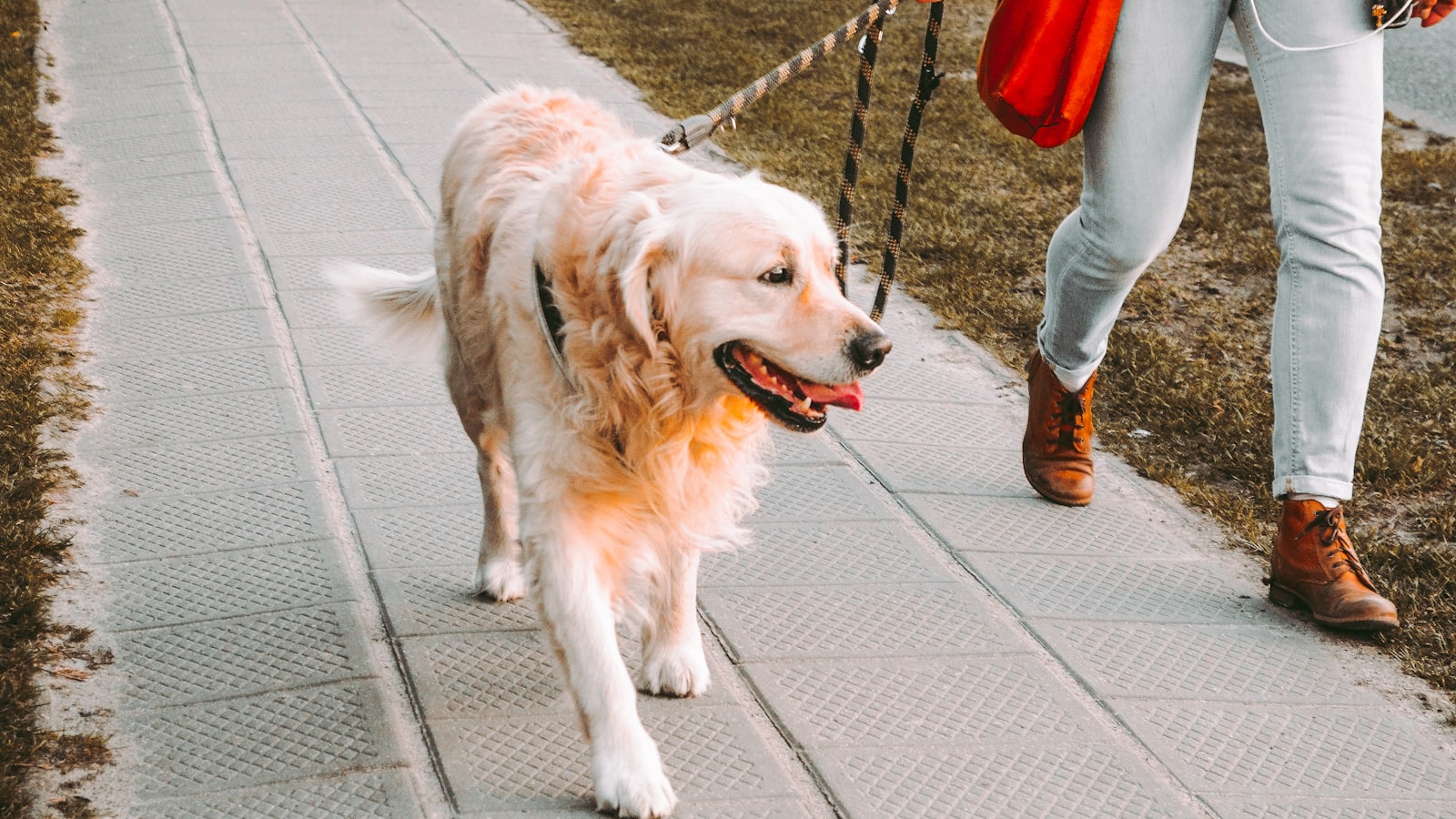
You set out for a relaxing walk and ten seconds later your shoulder is being towed down the block while your dog does an enthusiastic impression of a sled team. You're not doing anything wrong — pulling works for dogs. They pull, they get where they want to go, the behavior gets paid. The fix isn't yanking back; it's changing what the leash earns.
Dogs don't pull because they're stubborn. They pull because it works.
📋 Quick Read
- Pulling is a trained habit — every step forward on a tight leash quietly rewards it.
- Dogs barely generalize: a dog who's perfect in the kitchen may forget everything on a real sidewalk. Train the easy version first.
- Three days of boring indoor practice usually beats three months of correcting on busy streets.
- When walks break — first-block rocket launches, trigger blowups, backsliding after a week off — each pattern has its own fix, and none of them is more muscle.
The one rule that does the work
Here's the core: a tight leash stops the walk; a loose leash starts it again. Your dog learns that slack is the key that turns the world back on. It feels slow for about three days, then it clicks.
What you need
Nothing fancy. A well-fitted flat collar or harness and the standard leash you already walk with. A pouch of small, soft treats your dog genuinely rates — you'll be paying often in the early days. And a quiet indoor space to start in, because the habit gets built in the boring room long before the sidewalk sees it.
Step 1 — Pay for position indoors
In a boring room, stand still and wait. The instant your dog drifts to your side with a loose leash, say "yes" and feed a treat right at your pant seam — down low, where you want their head to be. You're building a picture: being next to you pays. Keep your leash hand anchored at your belt, and never feed out in front (treats out front teach forging).
Count how many voluntary check-in glances you get in a five-minute session.
Step 2 — Add three steps, then stop
Take three steps. If the leash stays loose, mark and feed at your leg. If it tightens, stop like a tree — no scolding, no reeling in. Wait for slack (your dog will turn back), then move again. The walk only resumes on slack.
If this feels painfully slow, you're probably doing it right. Nearly everyone tries to move outside too quickly.
When to move up — and when to drop back
Each level has a graduation test, and your dog's body will tell you before the numbers do. Ready looks like this: the leash hangs in a soft J-curve, the check-in glances come without being asked, and the ten loose steps happen without a single tree-stop. When a level gives you that picture on eight reps out of ten, take the next step: hallway to driveway, driveway to quiet sidewalk, quiet sidewalk to the real world. Anything less, stay and bank more reps — boring is what progress looks like from the inside.
And when a new level falls apart, that isn't failure — it's the dial set one notch too high. Drop back to the last place your dog was fluent, collect two easy sessions, and climb again. The rule never changes between levels; only the scenery does. Treat difficulty as an elevator you ride in both directions, and you'll reach the busy street faster than the owner grinding away at a level their dog never agreed to.
Take it outside in layers
The sidewalk has a hundred more smells and sights than your hallway, so expect your dog to "forget." That's a new context, not defiance. Start in the lowest-distraction spot you can find and bring better treats outdoors than you use inside.
The dogs who pull hardest usually aren't the stubborn ones — they're the ones whose owners jumped straight to busy streets before slack was a habit anywhere.
Troubleshooting the usual suspects
Loose-leash walking breaks in a handful of familiar ways. Find yours below.
Pulls like a freight train for the first block, then settles. That's arousal, not defiance — your dog has been rehearsing an explosive exit since breakfast. Burn off the fizz before the walk starts: two minutes of treat-scatter sniffing in the yard, or a round of hallway reps before the door opens. And make the door itself boring — leash on, then sit on the couch for a minute before you leave. A calm exit predicts a calm first block.
Perfect until a trigger appears — a dog, a cat, a skateboard. Past a certain threshold your dog isn't choosing to pull; they physically can't think. The tight mouth and hard-forward ears mean the lesson is already over. Add distance until your dog can see the trigger and still take a treat, pay generously right there, and let the gap shrink over weeks. Distance is the volume knob on every distraction.
You catch yourself reeling in. The most common handler slip there is. Hauling the leash toward you does your dog's job for them — they never have to choose slack, so they never learn it. Anchor your leash hand at your belt and let your feet do all the talking: stopped for tight, moving for loose. If your arm is tired at the end of a walk, your arm has been doing the training instead of your dog.
Great for a week, gone after a break. A skill this new evaporates without reps — one vacation or rainy stretch and the sled team reports for duty. Don't start over; rewind two levels for a day or two and let the habit resurface. Rebuilt skills tend to come back in a fraction of the original time.
Lovely on the way out, a tow-rope on the way home. Home predicts dinner, the couch, and the leash coming off — the destination has become the reward, so your dog commutes. Make the homestretch the best-paid part of the walk, and every so often stroll straight past your own front door and keep going. Home stops being a finish line worth towing you across.
Same rule, different dogs
Puppies are the easy case if you start now: no rehearsal history, so every loose step you pay for is written on a blank page. Keep sessions tiny — five minutes is a marathon at twelve weeks — and remember that to a puppy, the entire outdoors counts as a distraction. Adult rescues often show up with years of successful pulling on the odometer. The method is identical; the timeline is longer, and early sessions can feel like negotiating with a very cheerful freight union. Stay boring, stay consistent — an old habit needs more reps, not a different technique.
High-drive dogs do best when the environment itself goes on the payroll: after a nice stretch of slack, release them to that glorious bush with a "go sniff!" Sniffing becomes a paycheck you never have to carry. And a soft or fearful dog who lags, freezes, or hugs the ground isn't pulling in reverse — that's worry, not walking. The fix is confidence and distance from whatever's scary, not leash mechanics; pressure this dog and you'll teach them the walk itself is the problem.
The walk after the training
Once slack is a habit, the walk stops being a drill and becomes a conversation. A real-life walk holds both modes comfortably: stretches of easy walking near your side, and generous sniff breaks where your dog reads the neighborhood news. You're not building a heeling robot — you're aiming for a slack line between two parties enjoying the same walk.
Maintenance is simple, but it isn't optional. The tight-leash rule stays airtight for life — one hurried week of letting pulling work will resurrect the habit faster than you built it, because a rule that only sometimes breaks pays out like a slot machine. If a walk comes when you genuinely can't stop-and-wait, shorten the route rather than suspend the rule. Beyond that: keep a few treats in your pocket and pay a check-in or a lovely stretch of slack a couple of times per walk, forever — cheap insurance. After any layoff, give your dog a warm-up level before you judge them. The dogs who walk beautifully at ten aren't the ones trained hardest at one; they're the ones whose owners never stopped noticing the slack.
🗓 This Week's Plan
- Days 1–2: 5-minute indoor reps — mark and feed every loose-leash check-in. Compare voluntary glances in session 1 vs. session 4.
- Days 3–4: Move to the driveway. Practice "three steps → stop on tightness." Aim for 10 loose steps in a row.
- Days 5–7: One short daily "sniff walk" where the only goal is slack. Rate each walk's Leash Calm Score (1–5) and watch the trend.
Start the Leash Walking plan in Pak Social
Every walk becomes a training session. Log each one in Pak Social and rate its Leash Calm Score. After a week the trend shows exactly which environments your dog is ready for — and which are still too distracting.
Get Pak Social — Free ➡️ Up nextHow to Train a Reliable Recall: Teach Your Dog to Come When Called9 min read›