Training a Pit Bull (American Staffordshire Terrier): Breed-Specific Priorities
People-loving, eager, and highly trainable — the pit-bull-type dog is a devoted companion that thrives on partnership. The priorities are early socialization (especially with other dogs), strong impulse control, and a good outlet for a strong, driven athlete.
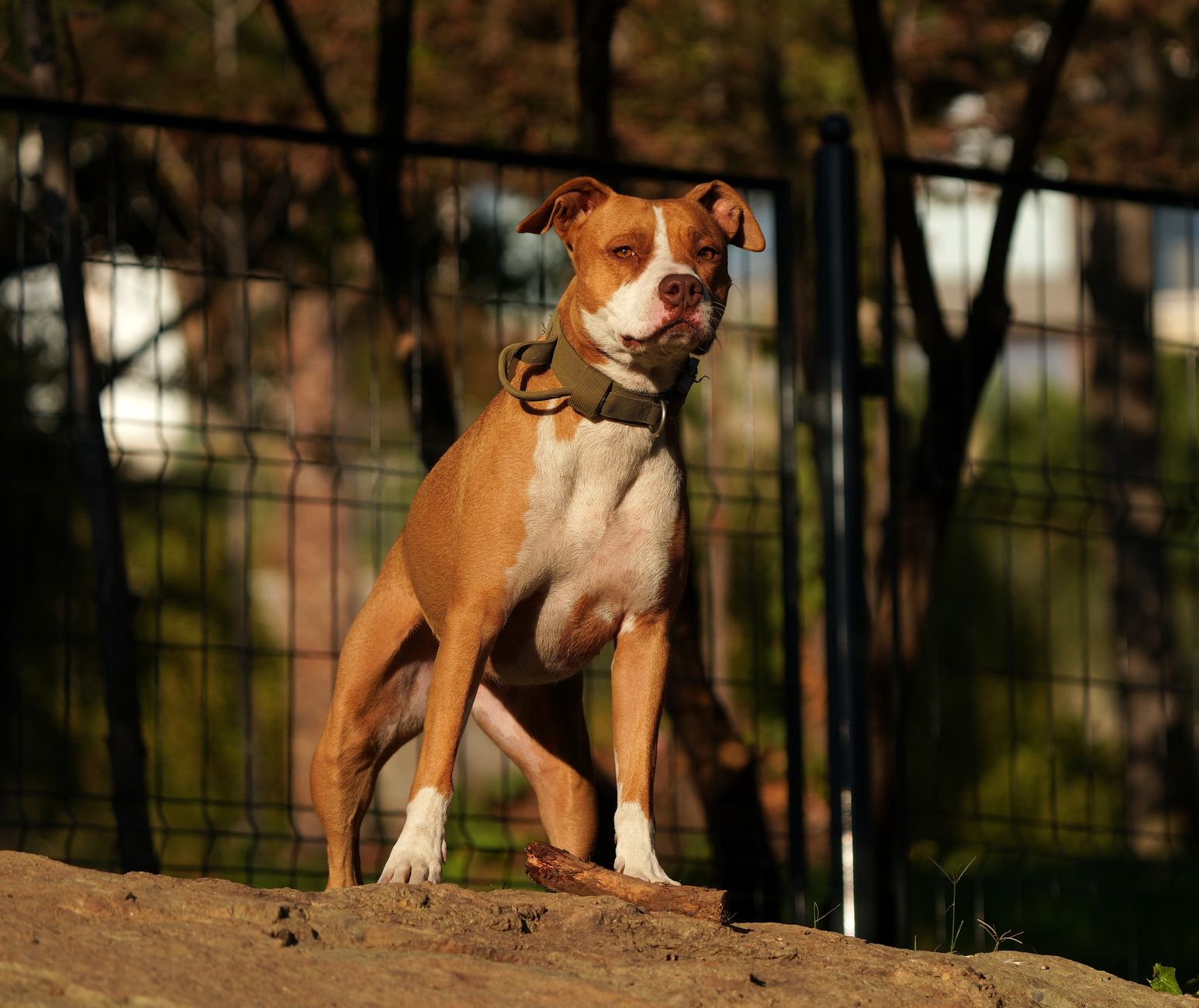
Pit-bull-type dogs — the American Staffordshire Terrier, American Pit Bull Terrier, and Staffordshire Bull Terrier — are, at their core, affectionate, eager-to-please, people-oriented dogs that bond intensely with their families and love to work with them. Well-raised, they're among the most devoted and trainable companions there are; the responsibilities are early socialization, ironclad impulse control, and honest management of a powerful, driven athlete. The terrier heritage brings strength, tenacity, and sometimes dog-to-dog reactivity, so the plan emphasizes broad socialization, a reliable 'leave it' and recall, real physical and mental outlets, and calm, positive, consistent handling.
A pit-bull-type dog is a people-loving athlete that wants a job and a partner. Socialize early, build rock-solid impulse control, and give that drive a real outlet.
📋 Quick Read
- The wiring: bred from bulldog-and-terrier stock — strong, tenacious, athletic, and intensely people-oriented, typically very affectionate and eager to please with their humans.
- The superpower: highly trainable and motivated to work with you; these dogs excel at obedience, tricks, weight pull, agility, and as therapy and companion dogs when well-raised.
- The watch-fors: potential dog-to-dog reactivity (early socialization and management matter), high strength and drive (impulse control and leash skills essential), and a strong need for exercise and mental work.
Eager and trainable — socialize broadly, especially around dogs
The thing most people don't expect about pit-bull-type dogs is how much they want to please. They bond hard to their people, love to work, and take beautifully to reward-based training — foundational obedience, tricks, and dog sports all come readily. Use that willingness: positive, consistent training builds a devoted, well-mannered companion and shows off the temperament the breed is genuinely known for among people who own them.
Socialization is the top responsibility, and it has a specific edge for this breed. Broad early exposure to people, places, and dogs builds confidence — but because some pit-bull-type dogs can develop dog-to-dog reactivity even while adoring humans, you socialize carefully and manage honestly. That means positive, supervised dog interactions, watching body language, not forcing dog-park situations, and accepting that a wonderful family dog may simply prefer to be selective with other dogs. Early socialization plus realistic management prevents the vast majority of problems.
Impulse control and outlets turn power into partnership
A pit-bull-type dog is strong and driven, so impulse control isn't polish — it's how you handle the dog safely and set it up to succeed. Prioritize a reliable 'leave it,' a solid recall, loose-leash walking, and a trained settle. These skills let an enthusiastic, powerful dog live easily in the world and give you real tools in exciting situations. Reward-based methods work best; harsh handling only wastes the breed's natural willingness and can create the very problems people fear.
Then give the athlete somewhere to put its energy. These are working-built dogs that need substantial daily exercise and mental stimulation — runs, structured games, tug with rules, flirt poles, dog sports, training work, puzzle feeders. A well-exercised, mentally engaged pit-bull-type dog is calm and content at home; an under-exercised one turns strength and drive into chewing, digging, and frustration. Meet the outlets, build the impulse control, socialize early, and you get the loyal, trainable, affectionate companion the breed is at its best.
- Positive, consistent, reward-based training
- Broad, positive socialization started early
- Dog interactions supervised and honestly managed
- A reliable 'leave it,' recall, and settle trained
- Loose-leash skills solid for a strong dog
- Substantial daily physical and mental outlets
🗓 This Week's Plan
- Days 1–2: Commit to positive, consistent training and start or sharpen a reliable 'leave it,' recall, and settle.
- Days 3–5: Build the socialization and dog-interaction plan — positive, supervised, honestly managed — and reinforce loose-leash skills.
- Days 6–7: Lock in substantial daily physical and mental outlets (runs, structured games, puzzles, a sport).
Train your pit-bull-type dog in Pak Social
Positive training, early socialization, strong impulse control, and real outlets. Pak Social helps your devoted, athletic companion be exactly the ambassador the breed deserves.
Get Pak Social — Free ➡️ Up nextTraining a Boston Terrier: Breed-Specific Priorities4 min read›